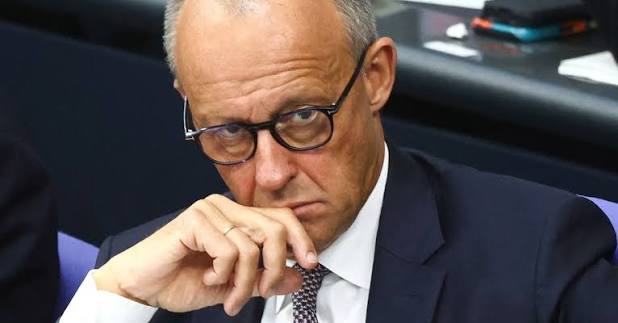
German Chancellor Friedrich Merz has launched a fierce attack on the far-right Alternative for Germany, AfD, following the party’s landslide victory in the eastern state of Saxony-Anhalt.
In a tense parliamentary debate in Berlin, Merz accused the AfD of pursuing a divisive migration agenda and warned that its call for large-scale deportations under its so-called remigration policy could amount to ethnic cleansing.
The confrontation came just days after the AfD secured nearly 44 percent of the vote in Saxony-Anhalt, its strongest result in the state and one of the party’s biggest electoral breakthroughs since its formation. The result also dealt a major blow to Merz’s Christian Democratic Union, which secured about 17 percent, roughly half its previous support.
AfD co-leader Alice Weidel used the parliamentary session to challenge Merz’s leadership, arguing that the election result reflected widespread dissatisfaction with his coalition government and its policies on migration, the economy and security.
Merz rejected the criticism and accused the AfD of undermining German interests, particularly through its stance on Russia and opposition to continued support for Ukraine. He also warned that the party’s migration proposals could have serious consequences for industries already dependent on foreign workers, including healthcare, hospitality and skilled trades.
Despite its sweeping victory, the AfD fell three seats short of the 42 required for an outright majority in Saxony-Anhalt’s 83-member parliament. It is now seeking support from other lawmakers to form a government, although Germany’s mainstream parties have maintained their refusal to cooperate with the far-right party.
The breakthrough has nevertheless intensified concerns across Germany, as the AfD seeks to translate its growing electoral support into political power. The party is classified as right-wing extremist by Germany’s domestic intelligence authorities and has made tougher immigration controls and deportations central to its political platform.
The result has also drawn international attention. U.S. President Donald Trump welcomed the AfD’s performance and blamed Germany’s immigration policies for the party’s rise.
Against that backdrop, a planned phone conversation between Trump and Merz was postponed. Berlin did not immediately provide a reason for the delay or announce a new date, adding another layer of tension to an already turbulent political week in Germany.