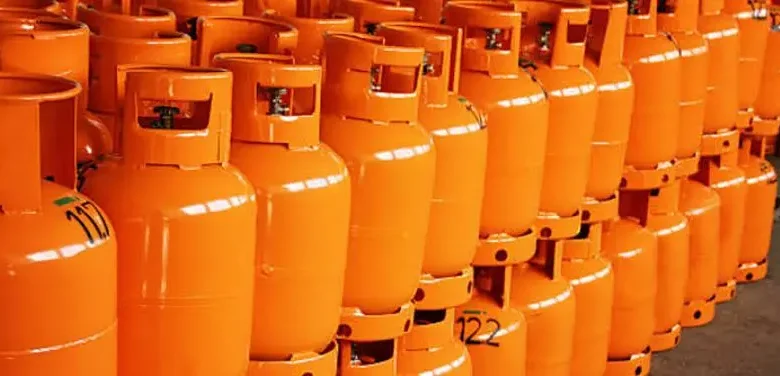
Nigerians are paying significantly more for cooking gas, as the average cost of refilling a 12.5kg cylinder rose to ₦20,609.48 in July 2025, a 44.51% increase compared to ₦14,261.57 in July 2024.
This was disclosed in the Liquefied Petroleum Gas (LPG) Price Watch Report for July 2025, released on Tuesday by the National Bureau of Statistics (NBS).
Despite a modest 1.91% decrease from ₦21,010.56 in June 2025, the sharp year-on-year jump underscores the growing burden of energy expenses on Nigerian households.
Efforts to Curb Soaring Prices
The Federal Government had earlier attempted to rein in prices by halting the export of locally produced LPG in October 2024, prioritising domestic supply. The policy, which took effect on November 1, 2024, was aimed at increasing availability and stabilising local prices.
Minister of State for Petroleum Resources (Gas), Ekperikpe Ekpo, said at the time that the move would “help reduce pressure on the local market.”
However, experts caution that while July’s slight month-on-month dip offers temporary relief, it may not signal a lasting price correction.
Breakdown by Cylinder Size
According to the NBS report:
- The 5kg LPG cylinder price fell slightly by 0.96%, from ₦8,323.95 in June 2025 to ₦8,243.79 in July 2025.
- Year-on-year, the 5kg refill cost increased by 37.98% from ₦5,974.55 in July 2024.
State-by-State Price Breakdown
12.5kg Cylinder:
- Highest Prices:
- Adamawa: ₦22,528.39
- Rivers: ₦22,512.49
- Taraba: ₦22,363.57
- Lowest Prices:
- Yobe: ₦19,030.00
- Niger: ₦19,154.99
- Nasarawa: ₦20,000.62
5kg Cylinder:
- Highest Prices:
- Adamawa: ₦9,011.36
- Rivers: ₦9,005.00
- Taraba: ₦8,945.43
- Lowest Prices:
- Yobe: ₦7,612.00
- Niger: ₦7,662.00
- Nasarawa: ₦8,000.25
Regional Trends
- South-South led the country with the highest regional average for both 5kg (₦8,511.26) and 12.5kg (₦21,278.14) cylinders.
- South-East followed with averages of ₦8,321.16 (5kg) and ₦20,802.89 (12.5kg).
- The South-West recorded the lowest averages: ₦8,073.92 (5kg) and ₦20,184.79 (12.5kg).
Data Collection
The NBS compiled the data from over 10,000 respondents across Nigeria’s 774 local government areas, offering a comprehensive national picture of household energy costs.