Brazil’s Supreme Court Orders Bolsonaro to Wear Electronic Tag Amid Coup Plot Trial

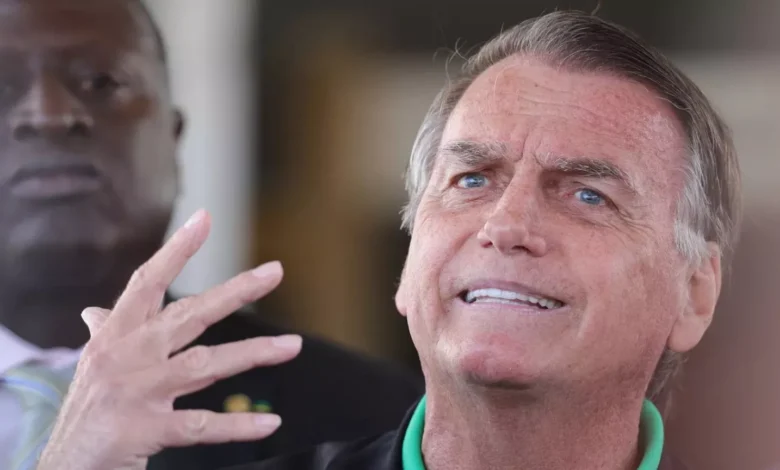
In a dramatic turn in Brazil’s unfolding political saga, the country’s Supreme Court has ordered former president Jair Bolsonaro to wear an electronic monitoring device as he awaits a verdict in his high-profile trial for allegedly plotting to overthrow the democratic government.
The ruling issued Friday by Justice Alexandre de Moraes, a prominent figure overseeing the case, comes amid growing tension both inside Brazil and internationally.
Moraes said Bolsonaro and his son, federal lawmaker Eduardo Bolsonaro, had incited “hostile acts” against democratic institutions—raising the stakes in a trial many see as a defining test of Brazil’s post-dictatorship democracy.
Bolsonaro, who is accused of attempting to overturn the results of the 2022 presidential election, has called the court’s decision a “supreme humiliation,” railing against what he claims is political persecution. The former army officer lost the election to leftist rival and current president Luiz Inácio Lula da Silva.
The trial centers on Bolsonaro’s alleged role in a failed attempt to subvert the 2022 election outcome—a move prosecutors say only failed because the Brazilian military refused to support it. When his efforts fell short, violent supporters took to the streets, storming government buildings in the capital Brasília in chaotic scenes that drew comparisons to the January 6 U.S. Capitol riot in Washington, D.C.
On Tuesday, federal prosecutors formally accused Bolsonaro and seven others of forming an “armed criminal association” and seeking to “violently overthrow the democratic order.” If convicted, they could face up to 40 years in prison.
In an extraordinary twist, the trial has triggered diplomatic ripples across the Atlantic, with former U.S. President Donald Trump leaping to Bolsonaro’s defense.
Calling the proceedings a “witch hunt,” Trump took to social media this week to demand the trial be dropped, labeling Bolsonaro a “highly respected” leader. On Thursday, he released a public letter insisting that the case should “end immediately.”
Escalating tensions further, Trump on July 9 announced a new round of punitive tariffs on Brazilian imports, vowing to increase them to 50% starting August 1. Unlike his broader tariff policies, which have been presented in economic terms, these measures were explicitly political, aimed at pressuring Brazil’s judiciary and leadership.
“Brazil’s insidious attacks on free elections cannot stand,” Trump declared. “If they retaliate, we escalate.”
Washington has also opened an investigation into Brazil’s alleged “unfair trading practices,” laying the groundwork for further economic confrontation.
President Luiz Inácio Lula da Silva has condemned Trump’s remarks and tariff threats, dismissing them as “unacceptable blackmail.” In a firm response on Thursday, Lula asserted:
“Brazil has only one owner: the Brazilian people.”
He added that his administration would not hesitate to retaliate against U.S. trade penalties if they materialize.
The trial of Jair Bolsonaro has reopened painful chapters in Brazil’s political history, reviving memories of the military dictatorship that ruled the country from 1964 to 1985.
Now, a five-judge panel from the Supreme Court is preparing to deliver a verdict that could have lasting consequences—not just for Bolsonaro’s political future, but for the strength of Brazil’s democracy.
With the world watching, Brazil stands at a crossroads: facing domestic unrest, geopolitical pressure, and a pivotal moment for the rule of law in Latin America’s largest democracy.