
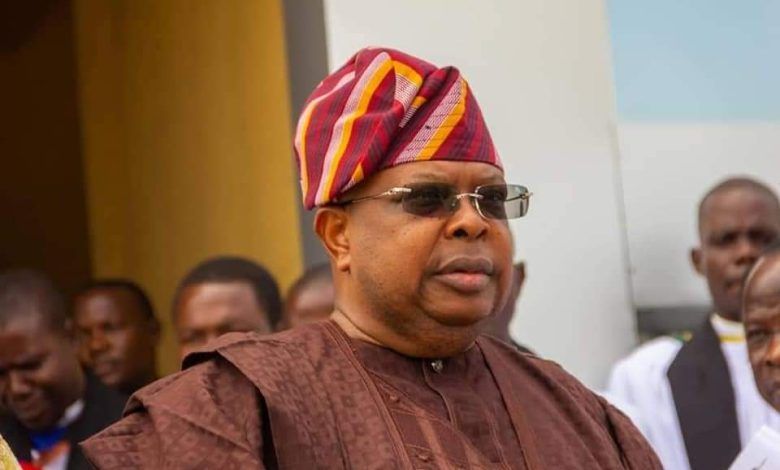
Power Minister Joseph Tegbe outlines plans for new hydropower projects, stronger transmission infrastructure and a debt settlement framework as Nigeria struggles to generate 5,000MW from more than 13,000MW of installed capacity…..
The Federal Government has set a long-term target of generating 70,000 megawatts of electricity by 2060, signalling plans for a major expansion of Nigeria’s power sector to meet the energy demands of a growing economy.
Minister of Power Joseph Tegbe announced the target on Tuesday at the 13th Nigeria Energy Leadership Summit in Lagos, where he outlined measures to improve grid stability, strengthen electricity transmission and increase generation capacity.
He acknowledged the scale of the challenge, noting that Nigeria continues to generate less than 5,000MW despite having more than 13,000MW of installed capacity.
However, Tegbe argued that the country must plan beyond its present limitations, particularly as industrial growth, technological advancement and the expansion of artificial intelligence infrastructure are expected to drive electricity demand higher.
He said the government’s 70,000MW ambition reflected the need to prepare for future consumption rather than focus exclusively on current supply levels.
Drawing comparisons with the United States, the minister pointed to the growing energy requirements of artificial intelligence and data centres, which are placing additional pressure on electricity infrastructure worldwide.
According to him, Nigeria must position itself to accommodate similar technological and industrial developments rather than risk falling behind as global energy demand evolves.
As part of its long-term strategy, the government plans to strengthen the national transmission network through an East-West Grid programme aimed at improving electricity delivery along major economic corridors.
Tegbe said the initiative would form part of broader efforts to coordinate power infrastructure development and ensure electricity reaches businesses, industries and communities more reliably.
The government is also considering investments in smaller hydropower schemes alongside major projects to diversify electricity generation and improve supply to underserved areas.
The minister disclosed that 21 dams had been identified along the Sokoto-Badagry Expressway for possible development into hydropower facilities.
He said President Bola Tinubu had directed that the identified dams be assessed and developed to ensure their potential for electricity generation was properly utilised.
Tegbe added that the government would continue pursuing the Mambilla hydropower project while exploring smaller schemes capable of supporting agricultural production, processing centres and local communities.
He said collaboration between federal and state governments, regulators and private-sector operators would be essential to coordinating investments and improving electricity supply across the country’s major economic corridors.
Beyond infrastructure, the minister identified the financial challenges facing the electricity industry as another priority for government intervention.
Tegbe disclosed that the Federal Government had paid N1.23 trillion out of the N3.3 trillion in legacy debts owed to power generation companies.
He said discussions were ongoing on structured settlement arrangements, payment assurance mechanisms and legally permissible net-off options to address outstanding obligations and prevent further debt accumulation.
The outstanding liabilities have remained a major concern for the sector, with financial pressures affecting the ability of industry participants to sustain operations and invest in additional capacity.
Addressing the debt burden, the government hopes to improve confidence among power producers and create a more stable financial environment for future investment.
Earlier, Lagos State Commissioner for Energy and Mineral Resources, Biodun Ogunleye, stressed that reliable and affordable electricity was central to the state’s economic development plans.
Ogunleye said the Lagos State Electricity Law, enacted in 2024, provided a framework for a more competitive electricity market, stronger regulation and increased private-sector participation.
The legislation forms part of the state’s efforts to develop an electricity market tailored to its economic needs while attracting investment into generation, transmission and distribution.
With Lagos serving as a major commercial and industrial centre, improved power supply is considered essential to supporting businesses, reducing operating costs and encouraging new investments.
In his opening address, Ade Yesufu, Exhibition Director for the Energy Portfolio at inD, said Nigeria possessed substantial natural gas resources and was attracting interest from a growing pool of energy developers and innovators.
He expressed optimism that these resources, combined with investment and stronger sector coordination, could help address the country’s persistent electricity challenges.
Yesufu also reflected on the long-standing experience of Nigerians celebrating the restoration of electricity after an outage, saying the industry’s ultimate goal should be to make reliable power an ordinary part of daily life.
His remarks highlighted the gap between Nigeria’s energy potential and the reality faced by households and businesses that continue to contend with unreliable electricity supply.
The government’s 70,000MW target sets an ambitious direction for the sector, but achieving it will require substantial investment, improved transmission infrastructure, financially sustainable electricity markets and the successful delivery of planned generation projects.
For now, Nigeria’s immediate challenge remains closing the gap between installed capacity and actual generation, while establishing the infrastructure and financial conditions needed to support a more reliable electricity system over the coming decades.