Israel Election: Netanyahu Leads Vote Count but Falls Short of Majority as Opposition Eyes Power

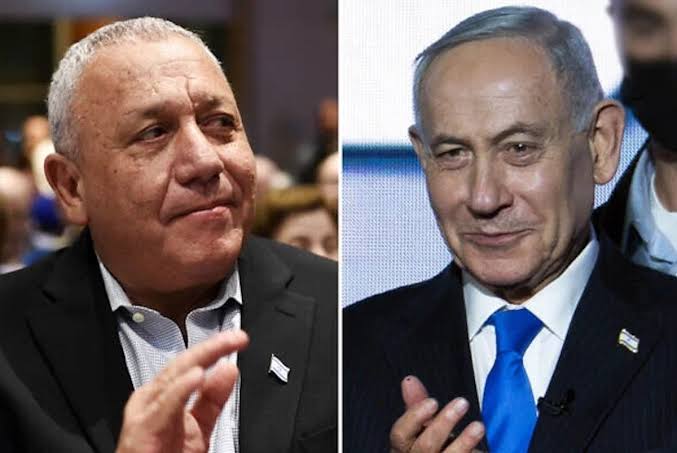
Israeli Prime Minister Benjamin Netanyahu is leading the country’s parliamentary election count but faces an uphill battle to secure another term, with neither major political bloc currently commanding the seats needed to form a government.
Partial results from Tuesday’s election showed Netanyahu’s right-wing bloc losing ground as counting progressed, while opposition leader Gadi Eisenkot and Arab-led parties emerged as key players in the battle for power.
With 84.5 per cent of ballot boxes counted by Wednesday afternoon, Netanyahu’s bloc was projected to secure 54 seats in the 120-member Knesset, compared with 49 for Eisenkot’s opposition bloc and 17 for Arab-led parties. A minimum of 61 seats is required for a parliamentary majority.
The figures leave the political future uncertain, setting the stage for potentially difficult coalition negotiations as rival camps explore ways to secure enough parliamentary support to govern.
Netanyahu Faces Battle to Retain Power
Netanyahu’s Likud party remained the largest individual party in the partial count, but its lead has not translated into a clear path to a governing majority.
Addressing supporters in Jerusalem, the prime minister called for a strong right-wing national government and highlighted his administration’s military record, including its confrontation with Iran.
However, his refusal to rely on Arab parties for parliamentary support could further complicate coalition negotiations if his existing right-wing and religious allies fail to deliver the required numbers.
The election represents a major test for Netanyahu following the Hamas-led attacks of October 7, 2023, and the subsequent wars that reshaped Israel’s security landscape and regional relationships.
His political future also remains clouded by deep domestic divisions over the government’s handling of the attacks, national security and his leadership.
Eisenkot’s Opposition Seeks Political Change
Eisenkot, a former chief of the Israel Defense Forces, has emerged as Netanyahu’s principal rival, leading an opposition bloc seeking to end the prime minister’s hold on power.
Although his camp has made gains, the latest figures leave it short of the 61 seats required to govern independently.
Eisenkot faces the challenge of uniting opposition parties with differing political priorities while seeking support from smaller factions that could determine the outcome of coalition negotiations.
The opposition’s ability to work with Arab-led parties could prove particularly important, although disagreements over such cooperation remain a significant obstacle.
Arab Parties Emerge as Potential Kingmakers
Arab-led parties have become central to the post-election calculations, with their combined projected representation rising to 17 seats in the latest count.
Their performance could give them considerable influence over the formation of the next government, particularly if neither of the main political blocs can secure a majority through its existing allies.
However, their seats do not automatically translate into support for Eisenkot or any alternative government. Any arrangement would depend on negotiations and political agreements that have yet to be finalised.
Netanyahu has ruled out relying on Arab parties to form his government, while the opposition also faces internal divisions over the terms of potential cooperation.
The final seat distribution could therefore determine whether Israel gets a new coalition government, a minority administration or faces another period of political uncertainty.
Record Turnout Highlights Election Stakes
Voter turnout reached 77.7 per cent, the highest level since 1999, underscoring the significance of an election shaped by security concerns, political divisions and public debate over the government’s record.
The strong participation reflects the high stakes for both Netanyahu and his opponents, with voters weighing national security, the aftermath of the October 7 attacks and the country’s political direction.
While Netanyahu’s bloc initially took the lead in the count, the latest figures show that securing enough support to govern will be a separate and more difficult challenge.
With counting still underway and the final seat allocation yet to be confirmed, Israel faces potentially prolonged negotiations before the composition of its next government becomes clear.