NASA’s Butch Wilmore Retires After Making History on Starliner and 25 Years of Service

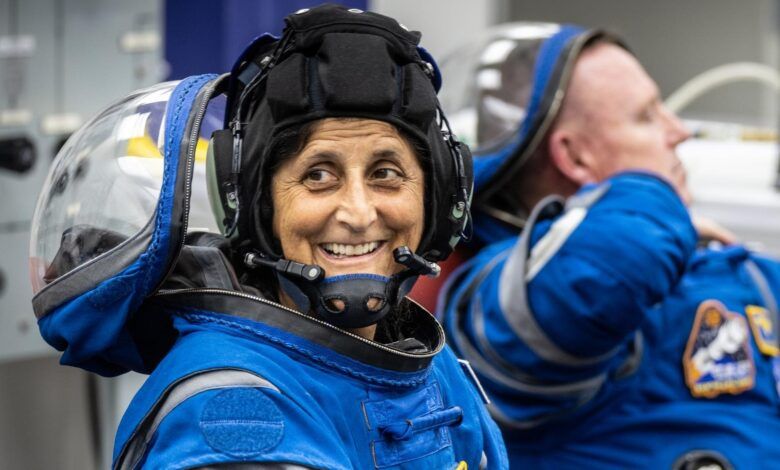
Veteran NASA astronaut and U.S. Navy captain Butch Wilmore has officially retired, closing the chapter on a distinguished 25-year career that included four space missions, and a dramatic nine-month stay aboard the International Space Station (ISS) a mission that began as a routine test flight but ended as one of the most gripping space sagas in recent NASA history.
NASA hailed Wilmore’s service as nothing short of extraordinary.
“His lasting legacy of fortitude will continue to impact and inspire the Johnson workforce, future explorers, and the nation for generations,” said Stephen Koerner, Acting Director of NASA’s Johnson Space Center.
Wilmore’s final assignment in June 2024 was to pilot Boeing’s Starliner on its first crewed test flight planned to last just eight days. But when the spacecraft experienced critical thruster failures during docking with the ISS, the mission turned into a nine-month endurance test in space.
“Docking was imperative,” Wilmore recalled. “If we weren’t able to dock, would we be able to make it back? We didn’t know.”
With the support of Mission Control, Wilmore and crewmate Suni Williams successfully completed the docking. But due to continued concerns about the Starliner’s safety for re-entry, NASA made the difficult call to leave the astronauts aboard the ISS while evaluating alternatives.
After months of assessments and delays, NASA dispatched a SpaceX Crew Dragon capsule to retrieve the astronauts. Their March 2025 return to Earth was met with relief and celebration across the space community.
Now 62, Wilmore retires well past the typical astronaut career span most are selected between ages 26 and 46. He joined NASA in 2000 following a stellar career as a Navy test pilot, accumulating a total of 464 days in space over the course of his missions.
In his farewell statement, Wilmore reflected on the emotional and philosophical significance of his journey beyond Earth.
“Even as I ventured beyond Earth’s limits, I remained attuned to the beauty and significance of the world below,” he said. Driven by what he called an “insatiable curiosity,” Wilmore leaves behind a legacy of resilience, leadership, and an unshakable spirit of exploration.
Like many long-duration astronauts, Wilmore and Williams underwent intensive rehabilitation after returning from their extended stay in microgravity.
He is also expected to participate in long-term health studies on the effects of space travel on the human body—research critical to future missions to the Moon and Mars.
Wilmore’s career and particularly his final mission will be remembered as a testament to the risks, resilience, and rewards of human spaceflight. His name is now permanently linked to the historic crewed Starliner test flight, marking a pivotal chapter in NASA’s commercial spaceflight ambitions.
His journey may have ended on Earth, but his legacy continues to orbit.