Food Airdropped into Gaza as Israel Opens Aid Routes Amid Escalating Humanitarian Catastrophe

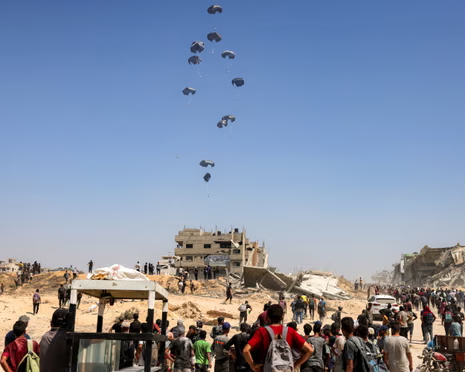
In a critical shift in the ongoing humanitarian crisis, international aid agencies and regional partners have begun airdropping food into Gaza, following Israel’s announcement that it would open new humanitarian corridors into the besieged enclave.
The development comes amid mounting international pressure and a worsening malnutrition crisis that has already claimed dozens of lives in July alone.
On Sunday, the Jordanian and Emirati militaries conducted three parachute drops delivering 25 tonnes of aid, part of a broader push to reach starving civilians in hard-hit areas.
Gaza has endured 21 months of brutal conflict, worsened by a total Israeli blockade from March to May that brought humanitarian operations to a near standstill. Although the blockade has since been eased, aid agencies warn that the scale of relief remains dangerously inadequate.
The World Food Programme (WFP) says one-third of Gaza’s population has gone days without food, and nearly half a million people are enduring famine-like conditions.
Meanwhile, the World Health Organization (WHO) painted a harrowing picture of rising deaths from malnutrition. Of 74 confirmed starvation-related deaths in 2025, 63 occurred in July, including 24 children under five and 38 adults, most of whom died upon arrival at medical facilities or shortly thereafter, showing “clear signs of severe wasting.”
Israeli Prime Minister Benjamin Netanyahu rejected accusations that Israel was weaponizing starvation, instead blaming the United Nations for spreading “lies and pretexts.”
Speaking from an airbase, Netanyahu insisted that “secure routes for aid have always existed” and that “today, it’s official — no more excuses.”
The Israeli military added that it had been coordinating with UN agencies to expand aid delivery but provided few specifics about the scope or security of the new corridors.
However, UN agencies and humanitarian groups remain skeptical. The Gaza Humanitarian Foundation — a newly established, US-backed private aid channel — has drawn criticism for allegedly bypassing traditional aid mechanisms and serving Israeli strategic interests.
Several NGOs have refused to cooperate, citing safety concerns and lack of neutrality. Reports also indicate that hundreds of civilians have been killed while trying to access aid from the foundation’s drop sites.