Finance Minister says Federal Government received ₦5.4tn, while states and local governments shared ₦10.4tn as reforms reshape Nigeria’s finances…..
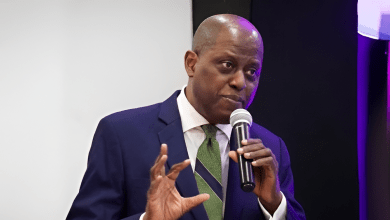
Nigeria’s decision to remove petrol subsidies generated an estimated ₦15.8 trillion in additional resources for the Federation between June 2023 and December 2025, according to the Minister of Finance and Coordinating Minister of the Economy, Taiwo Oyedele.
Oyedele disclosed the figure on Wednesday while outlining the financial impact of the economic reforms introduced by President Bola Tinubu’s administration.
According to the minister, the money did not enter government accounts as a single payment labelled “subsidy savings”. Rather, the financial benefit was reflected in the resources that became available to the Federation after the petrol subsidy was removed.
“There wasn’t any alert to the Federation Account with the description ‘subsidy savings’,” Oyedele explained.
Of the ₦15.8 trillion in resources attributed to the subsidy reform, the Federal Government received ₦5.4 trillion, while ₦10.4 trillion was distributed to state and local governments through the Federation Account.
The figures provide one of the clearest indications yet of the fiscal impact of the policy, which has remained one of the most controversial decisions of the Tinubu administration.
Oyedele said the government’s improved revenue position was not solely linked to the removal of petrol subsidies.
Between June 2023 and December 2025, the Federal Government generated an additional ₦3.1 trillion in independent revenue, which the minister attributed largely to increased remittances from government-owned entities and higher surpluses recorded by government agencies.
Despite the additional revenue, however, the government continued to borrow.
Oyedele said the Federal Government incurred ₦11.9 trillion in additional borrowing during the same period.
He said the combination of increased independent revenue and borrowing provided the Federal Government with ₦20.4 trillion in additional resources.
The minister’s disclosure comes amid continued debate over whether the reforms have sufficiently strengthened government finances, particularly as Nigerians continue to contend with higher living costs.
₦30.64tn spent as government finances come under pressure
While additional resources increased during the period, government expenditure also rose substantially.
Oyedele said the Federal Government recorded ₦30.64 trillion in incremental expenditure between June 2023 and December 2025.
The figures highlight the difficult fiscal environment confronting the administration despite the reforms.
Explaining the rationale behind the policies, Oyedele described the removal of petrol subsidies and the reform of the foreign exchange system as necessary measures to address longstanding distortions in the Nigerian economy.
He said the petrol subsidy had placed significant pressure on government finances, while the previous foreign exchange regime had created opportunities for distortion and corruption.
According to him, the reforms were therefore designed to tackle structural problems rather than provide an immediate solution to every economic challenge facing the country.
Tinubu announced subsidy removal on inauguration day
President Bola Tinubu announced the end of the petrol subsidy on May 29, 2023, during his inauguration as President.
His declaration that “subsidy is gone” was followed by a sharp increase in petrol prices across the country.
The increase subsequently affected transportation, logistics and the cost of producing and distributing goods, contributing to a broader rise in the cost of living.
For households, the impact was particularly visible in transportation and food prices, while businesses faced higher operating and distribution costs.
The Federal Government has maintained that ending the subsidy was necessary to prevent an increasingly expensive subsidy regime from consuming resources that could be directed towards infrastructure, social programmes and other areas of the economy.
Government rolls out measures to cushion impact
The administration has since introduced several initiatives aimed at reducing the pressure created by the reforms.
Among them are wage adjustments, interventions targeted at agriculture and efforts to expand the use of Compressed Natural Gas (CNG) as a cheaper alternative for transportation.
The government has also continued to defend its broader economic reform programme, arguing that the immediate hardship associated with the policies must be weighed against the longer-term objective of creating a more sustainable fiscal and economic system.
However, critics have continued to question whether the benefits of the reforms are reaching ordinary Nigerians quickly enough, particularly as households struggle with elevated food, transport and energy costs.
The latest figures from the Finance Minister therefore present a mixed picture: the removal of petrol subsidies has significantly altered the government’s finances and generated additional resources for the Federation, but the government has simultaneously had to increase revenue collection and borrowing to meet rising expenditure.
For Nigerians, the central question remains whether the fiscal gains being reported by the government will eventually translate into lower living costs, better public services and a measurable improvement in household welfare.