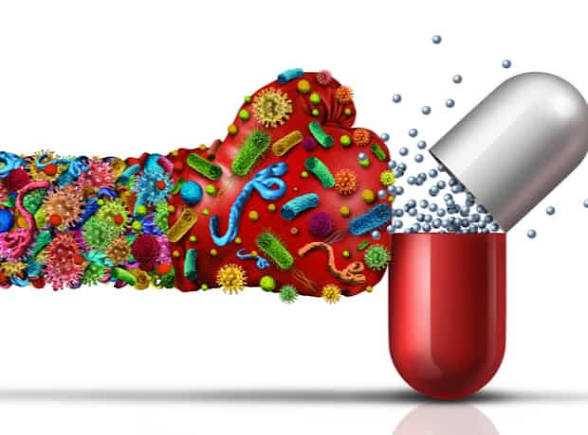
The World Health Organisation (WHO) has warned that antimicrobial resistance (AMR) is claiming about one million lives annually from drug-resistant bacterial infections, with urgent action needed to prevent further loss of lives and economic damage.
Acting Director of the WHO Department of Antimicrobial Resistance, Dr Jean-Pierre Nyemazi, gave the warning at a press conference held to mark the exhibition, “AMR: The Human Stories Behind a Silent Pandemic,” at the European Parliament in Brussels.
The exhibition, organised by the WHO and Member of the European Parliament, Hon. Martin Häusling, runs from September 28 to October 2, 2026, and features personal accounts of people affected by antimicrobial resistance across Europe.
Nyemazi said AMR affects humans, animals, plants, food systems, economies and the environment, stressing that resistant pathogens can move across sectors and national borders.
He said, “One million people die every year due to drug-resistant bacteria alone — that is, two people every minute die of bacterial AMR.”
According to him, the economic consequences of AMR are also significant, as resistant infections increase healthcare costs, prolong hospital stays and may force family members to abandon their jobs to care for sick relatives.
He stressed the need for countries to adopt a One Health approach, describing it as essential to tackling AMR because the problem cuts across human, animal and environmental health.
Nyemazi said the WHO, together with the Food and Agriculture Organisation of the United Nations (FAO), United Nations Environment Programme (UNEP) and World Organisation for Animal Health (WOAH), was working through the Quadripartite Joint Secretariat on AMR to coordinate the global response.
He disclosed that WHO Member States approved an updated Global Action Plan on AMR at the 2026 World Health Assembly, providing a framework for the next decade.
He identified infection prevention, vaccination, infection prevention and control, water, sanitation and hygiene, improved animal husbandry, stronger surveillance, responsible antimicrobial use, access to quality medicines and diagnostics, and reduction of environmental contamination as key measures against AMR.
“The tools exist and the evidence is there, but the cost of inaction is rising. The longer we delay action, the higher the cost becomes,” he said.
Nyemazi also called for stronger legislation, financing and accountability to support national AMR commitments, while urging the media to play a greater role in bringing the issue into public debate.
He said the theme of this year’s World AMR Awareness Week, scheduled for November 18 to 24, is “One Health, One Action, Prevent AMR Now.”
Speaking at the event, Häusling warned against the excessive and inappropriate use of antibiotics, particularly in animal agriculture.
He said antibiotics were sometimes administered to entire groups of animals when only one animal was sick, describing the practice of mass treatment as dangerous.
“When one chicken becomes sick, the entire group is given antibiotics even if the others show no symptoms. We must move away from this mass treatment,” he said.
Häusling also expressed concern about the use of last-resort antibiotics in food-producing animals, stressing that such medicines should be preserved for situations where other treatment options fail.
He further called for greater attention to pharmaceutical contamination from slaughterhouses and other facilities, noting that resistant pathogens could enter the environment through wastewater.
The lawmaker said AMR should remain on the political agenda, noting that its consequences extend beyond healthcare to families, livelihoods and the wider economy.
One of the most compelling accounts at the event came from Rob Purdie, an AMR survivor and member of the WHO Task Force of AMR Survivors.
Purdie recounted how an undiagnosed fungal infection in 2012 was initially treated as a sinus infection and later as cluster headaches before he was eventually diagnosed with fungal meningitis.
He said delayed diagnosis resulted in prolonged illness, multiple failed antifungal treatments and hospital bills of about $250,000.
Purdie said he eventually required a combination of antifungal drugs, including amphotericin B, and has continued taking antifungal medication for years because the infection cannot currently be cured but can only be controlled.
He said the illness also prevented him from earning a living for about five years, leaving his family dependent on social safety nets and causing long-term financial difficulties.
Purdie said AMR cuts across socioeconomic, geographical, cultural and political boundaries, adding that addressing it would require a similarly broad global response.
“This is not a war we can win, but it is not a war we can afford to lose,” he said.
He urged stakeholders to remove the word “silent” from the description of AMR, arguing that the scale of suffering and its long-term consequences demanded greater public attention.
Responding to questions on antibiotic access and misuse, Nyemazi said some countries, including parts of sub-Saharan Africa, faced a paradox in which people could obtain medicines from pharmacies without prescriptions while access to proper diagnosis and healthcare remained limited.
He called for stronger primary healthcare systems, public education, enforcement of regulations restricting the dispensing of reserve antibiotics without prescriptions, and the use of digital technologies to track medicine dispensing.
On Nigeria, Nyemazi said limited access to veterinary services remained a challenge and stressed the need for governments, civil society, the private sector and individuals to work together.
He identified ineffective coordination among sectors as one of the major obstacles to tackling AMR, saying the updated Global Action Plan would provide practical guidance on governance and coordination at national level.
Nyemazi also said the new plan places greater emphasis on prevention, governance, measurable targets and behavioural change, including how medicines are prescribed and used.
He cited the 10 per cent reduction target adopted by UN Member States in the 2024 Political Declaration on AMR, saying the target was achievable through infection prevention and control, vaccination and improved access to quality antimicrobials.
The WHO official also called for continued investment in research into new antibiotics, antifungals, phage therapy and other technologies, but cautioned that new medicines alone would not solve the problem.
“We must invest equally in AMR stewardship — reducing inappropriate use in both agriculture and human medicine — and in diagnostics,” he said.
Purdie similarly called for greater investment in new antifungal medicines, vaccines and diagnostics, while urging immediate action to reduce unnecessary antimicrobial prescriptions.
He said people could already make a significant difference by treating antibiotics and antifungals as essential resources that must be protected.
“We need to change the discussion — from unnecessary prescriptions to vaccination, water, sanitation and hygiene, One Health, and above all people,” he said.