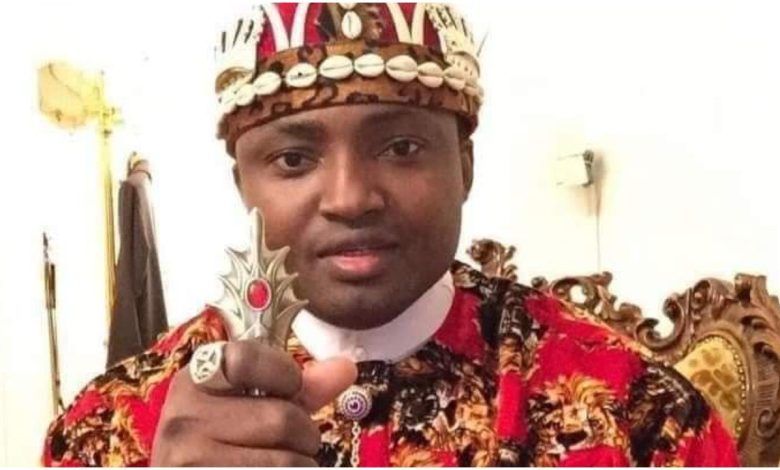
After nearly two years behind bars in Finland over terrorism-related offences, Nigerian-born separatist leader Simon Ekpa has reportedly regained his freedom, according to a lawyer, Aloy Ejimakor.
Ejimakor, a former lead counsel to detained Indigenous People of Biafra leader Nnamdi Kanu, announced Ekpa’s release in a Facebook post on Tuesday, saying confirmation came from his close associate, David Matsanga.
The Deputy Prime Minister of the Biafra Government in Exile, Ngozi Orabueze, also confirmed the development on her official X account, sharing a video showing Ekpa emerging from prison as supporters gathered to welcome him.
In the footage, Ekpa briefly declared that the truth could never remain hidden forever.
Ekpa was arrested by Finnish authorities in November 2024 over terrorism-related offences connected to separatist activities in Nigeria.
He was subsequently convicted in September 2025 by the Päijät-Häme District Court for participating in a terrorist organisation and inciting crimes for terrorist purposes.
In October 2026, Finland’s Court of Appeal reduced his six-year prison sentence to four years while upholding his conviction. The ruling, however, remained subject to a possible further appeal.
His reported release coincides with November 17, 2026, the date his legal support team had earlier indicated he would regain his freedom.
The case centred on activities between August 2021 and November 2024, during which the court found that Ekpa used his extensive social media following to fuel tensions in south-eastern Nigeria in pursuit of an independent Biafran state.
The court also found him guilty of aggravated tax fraud and violations of provisions of Finland’s Lawyers Act, alongside the terrorism-related offences. It further ruled that he had facilitated the supply of weapons, explosives and ammunition to armed groups through his network and encouraged criminal activities in Nigeria.
Ekpa, who relocated to Finland in 2007 and previously served on Lahti City Council, denied the charges during his trial.
However, it remains unclear whether his release was granted through parole or another legal arrangement.
Biafra, in south-eastern Nigeria, declared independence in 1967, triggering a civil war that lasted until 1970, when the secessionist movement was defeated.