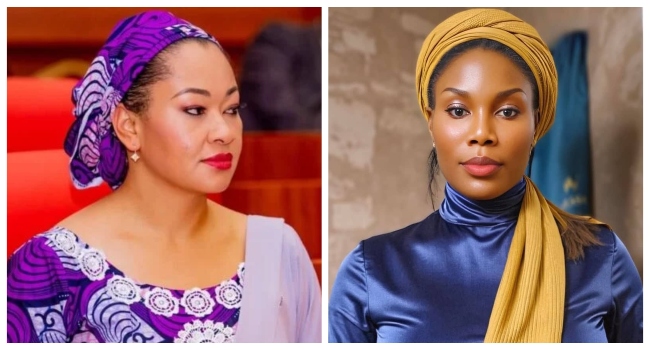
Suspended Nigerian Senator Natasha Akpoti-Uduaghan has publicly rejected claims made by United Kingdom-based Nigerian businesswoman and activist, Sandra Duru, who alleged that the lawmaker offered her money to support a negative media campaign against Senate President Godswill Akpabio.
During a Facebook livestream on May 1, Duru—who is also known as Prof Mgbeke—claimed that Senator Akpoti-Uduaghan tried to persuade her to participate in a smear campaign targeting Akpabio, allegedly offering millions of naira and undisclosed sums in U.S. dollars.
Duru also played audio clips she said were recorded phone conversations with the senator. According to Duru, the alleged campaign’s purpose was to politically undermine Akpabio and weaken President Bola Ahmed Tinubu by displacing a key ally from his leadership role in the National Assembly.
In a formal statement issued on Friday, Senator Akpoti-Uduaghan dismissed the allegations as completely false and politically motivated. She accused Duru of working to advance a narrative orchestrated by her political rivals.
“I have carefully watched a livestream done by one Sandra C. Duru on Facebook, on May 1, 2025,” Natasha said. “The content of the livestream, including the voice attributed to me, is entirely untrue and has been manipulated to serve Sandra Duru’s ulterior motive of executing Senator Godswill Akpabio’s script.”
Senator Natasha also challenged the authenticity of the recordings and suggested that Duru had rebranded herself online for questionable purposes. “To the best of my knowledge, those words are false and did not arise from any legitimate interaction involving me,” she stated.
While the senator has pledged to give a more comprehensive response in due course, her rebuttal adds another layer to an already tense political saga. Akpoti-Uduaghan was suspended from the Senate in March 2025 over allegations of “unruly conduct,” which she insists was retaliation for accusing Akpabio of sexual harassment—an allegation he has strongly denied.
The ongoing exchange has drawn widespread public attention and continues to fuel debate about power, gender, and transparency within Nigeria’s legislative chambers.