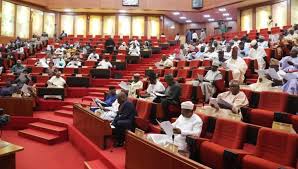
The Senate has passed for second reading a bill seeking to decriminalise attempted suicide in Nigeria, establish a national suicide prevention framework and provide rehabilitation for survivors, despite opposition from Senate President Godswill Akpabio.
Sponsored by Senator Asuquo Ekpenyong, representing Cross River South, the proposed legislation seeks to resolve a conflict between Nigeria’s mental health laws and existing criminal statutes that punish attempted suicide with imprisonment.
Leading the debate, Ekpenyong argued that while the National Mental Health Act recognises attempted suicide as a psychiatric emergency requiring medical intervention, Section 327 of the Criminal Code and Section 231 of the Penal Code continue to criminalise the act.
He maintained that decriminalisation must be accompanied by accessible mental healthcare, describing suicide as a complex public health issue that requires compassion, treatment and sustained support rather than punishment.
The senator warned that criminalising attempted suicide discourages survivors from seeking help, forces families to conceal incidents and undermines accurate data collection. He also cautioned that the threat of prosecution could worsen the risks faced by people experiencing severe emotional distress.
The bill proposes replacing imprisonment with mandatory mental health assessments, referrals, treatment and follow-up care. It also provides for crisis helplines, public awareness campaigns, training for police officers, teachers and healthcare workers, as well as a national data system to strengthen suicide prevention efforts.
However, Akpabio opposed the proposed decriminalisation, arguing that removing criminal penalties could encourage suicide attempts. He maintained that the issue required further scrutiny, particularly because the relevant provisions are contained in both the Criminal Code and the Penal Code.
The Senate President also called for the involvement of State Houses of Assembly during a public hearing to address potential legal inconsistencies.
Following its passage for second reading, the bill was referred to the Senate Committees on Judiciary and Health for further legislative consideration and a public hearing.