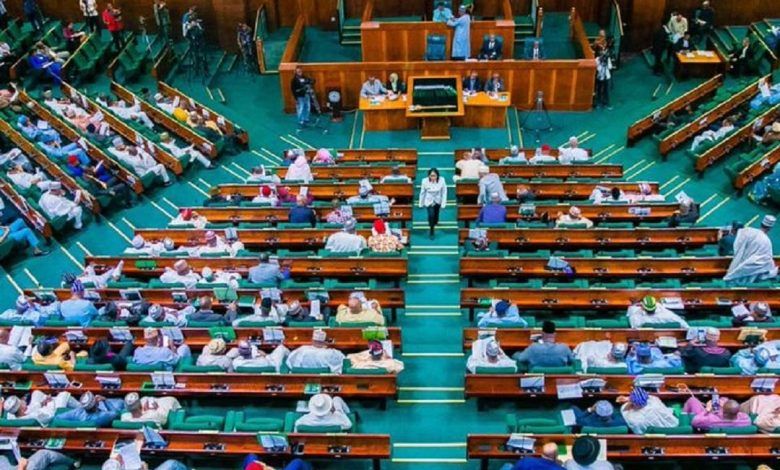
The House of Representatives on Tuesday rejected a key constitutional amendment bill that sought to institutionalize the rotation of the presidency among Nigeria’s six geopolitical zones.
The move, which was aimed at fostering political inclusiveness and national unity, failed to garner the necessary support during a heated plenary session.
Presided over by Speaker Tajudeen Abbas, the session also saw the defeat of six additional amendment bills intended to reform critical aspects of the nation’s governance, judiciary, and electoral systems. The bills were rejected at the second reading stage, a vital phase in the constitutional amendment process.
The proposal for a rotational presidency, sponsored by Deputy Speaker Benjamin Kalu, sought to amend the constitution to ensure that the offices of the President and Vice President rotate among the six geopolitical zones: North Central, North East, North West, South East, South South, and South West.
Advocates of the bill argued that it would promote equity, foster unity, and reduce regional marginalization. However, the bill failed to secure the two-thirds majority required for constitutional amendments.
The House also voted against several other constitution alteration proposals, including:
Transfer of political party oversight from the Independent National Electoral Commission (INEC) to a newly proposed Office of the Registrar-General of Political Parties (Sponsored by Speaker Tajudeen Abbas and Hon. Francis Waive).
Establishment of independent Offices of Auditors-General for Local Governments and the Federal Capital Territory (Sponsored by Hon. Julius Ihonvbere), intended to strengthen fiscal transparency and accountability at the grassroots level.
Judicial reform bill to increase the minimum number of judges of the Federal High Court to 100 to reduce case backlogs and improve judicial efficiency (Also sponsored by Hon. Julius Ihonvbere).
Expansion of admiralty jurisdiction of the Federal High Court to cover inland waterways such as Rivers Niger and Benue and designated international shipping routes, aimed at bolstering Nigeria’s maritime legal framework.
Empowerment of the National Judicial Council (NJC) to independently determine judicial salaries in collaboration with the National Salaries, Incomes and Wages Commission.
Creation of Ughelli East Local Government Area in Delta State (Sponsored by Hon. Francis Ejiroghene Waive).
All seven bills were grouped into a single motion and subjected to a collective voice vote, resulting in outright rejection. Attempts to separate and reconsider each bill individually were unsuccessful, despite appeals from the Chairman of the House Committee on Rules and Business.
While there is speculation that the proposals might be revisited in subsequent sittings, the depth of opposition highlights the formidable challenge of building consensus around constitutional reform in Nigeria’s fractious political climate.
The rejection of the bills exposes ongoing divisions within the legislature, especially around contentious issues such as power rotation, judicial autonomy, and local governance. Critics view the outcome as a missed opportunity to address long-standing structural imbalances and implement necessary reforms.
Political observers argue that the failure to advance these constitutional changes underscores a broader resistance among Nigeria’s political elite to disrupt the existing power structure — despite growing demands from civil society for inclusive governance and accountability.