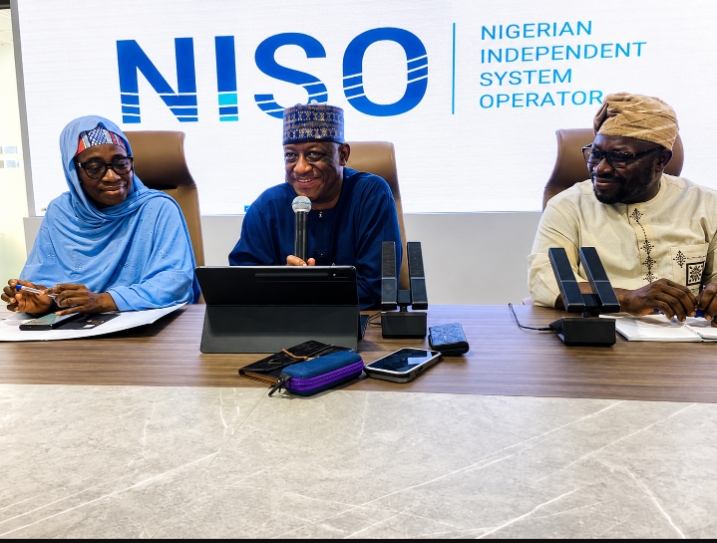
The Nigerian Independent System Operator (NISO) has commenced the second phase of its capacity development programme for system operators, as part of efforts to strengthen the safe, secure and reliable management of Nigeria’s national electricity grid.
The programme is designed to enhance the technical competence and operational readiness of system operators to effectively manage the increasing complexities of the power system and respond to changing operational conditions.
Declaring the training open, the Managing Director/Chief Executive Officer of NISO, Engr. Abdu Bello Mohammed, said continuous capacity development was critical to ensuring that system operators remained equipped to handle the demands of modern power-system operations.
Mohammed stressed that NISO’s responsibilities as an independent system operator required technical competence, sound judgement, discipline, teamwork and an unwavering commitment to safety.
He said the programme would foster a common operational culture anchored on professionalism, integrity, neutrality, reliability and continuous improvement.
The NISO chief executive urged participants to deepen their knowledge of the Grid Code, describing it as a fundamental standard guiding the responsibilities of system operators.
He also encouraged active participation and knowledge-sharing, saying the ultimate objective was to translate the training into improved operational performance across NISO’s control centres.
Mohammed assured that NISO would continue to invest in its system operators, noting that modern technologies could only achieve their full potential when supported by competent and well-trained professionals.
Also speaking, the Executive Director, System Operations, Engr. Nafisatu Ali, highlighted the critical role of system operators in independently and transparently operating, monitoring, coordinating and managing the national grid for safe, secure and economical electricity delivery.
Ali said their responsibilities included real-time grid management, coordination of generation and power flows, load allocation, outage management, emergency response and maintenance planning.
She stressed that, given the interconnected nature of Nigeria’s power system, effective coordination remained essential to maintaining grid stability.
The Executive Director urged participants to strengthen their understanding of voltage and frequency control, outage management, power-flow monitoring, real-time balancing of generation and load, as well as coordination among control rooms.
She further encouraged participants to learn from system disturbances and near misses, describing such experiences as opportunities to strengthen operational knowledge and prevent future incidents.
The Executive Director, Finance and Corporate Services, Babajide Ibironke, emphasised the need for the training programme to deliver measurable value to both participants and NISO.
Ibironke disclosed that participants would be required to share the knowledge acquired with their respective teams, in line with the organisation’s knowledge-sharing policy.
The training is part of NISO’s broader efforts to develop the human capacity required to support the effective and reliable operation of Nigeria’s evolving electricity system.