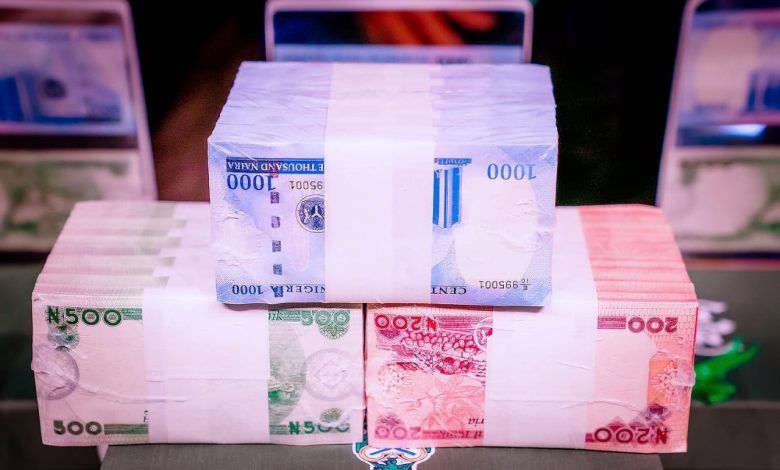
The figure represents a monthly increase of N7.51 trillion, as the Central Bank of Nigeria balances inflation control with efforts to support economic activity…..
Nigeria’s broad money supply rose to N146.6 trillion in September 2026, up from N139.09 trillion in August, representing an increase of approximately N7.51 trillion or 5.4 per cent in one month.
Data published on the Central Bank of Nigeria’s (CBN) website showed that the growth extended the upward trend in money supply recorded through much of the year.
The increase comes as the CBN continues to balance efforts to contain inflation with measures aimed at supporting economic activity and maintaining macroeconomic stability.
Broad money supply, measured as M3, increased from N123.95 trillion in January to N146.6 trillion in September, reflecting a substantial expansion in the volume of money within the financial system over the first nine months of 2026.
The data showed that money supply rose from N125.19 trillion in April to N129.54 trillion in May, before increasing to N133.27 trillion in June and N139.1 trillion in July. It stood at N139.09 trillion in August before reaching the September figure.
Narrow money, which comprises currency and highly liquid deposits, also increased from N43.11 trillion in August to N44.05 trillion in September. Currency held outside banks rose from N4.87 trillion to N4.92 trillion over the same period.
Broad money includes currency outside banks, demand deposits, savings and time deposits, as well as foreign currency deposits. Although its expansion indicates an increase in the stock of money in the economy, the figures alone do not establish how much of the growth translated into consumer spending or additional inflationary pressure.
The increase follows the CBN’s decision at its 307th Monetary Policy Committee (MPC) meeting in Abuja to reduce the benchmark interest rate by 350 basis points to 23 per cent. The reduction was the largest cut in the Monetary Policy Rate (MPR) since December 2006.
The MPC also adjusted the interest rate corridor around the MPR to +50 and -300 basis points, while retaining the Cash Reserve Requirement (CRR) for commercial banks at 45 per cent.
The CRR for merchant banks remained at 16 per cent, while the 75 per cent requirement on non-Treasury Single Account public-sector deposits was also maintained.
The latest decision followed a period of tight monetary policy aimed at managing inflation. At its 306th MPC meeting in July 2026, the committee unanimously retained the MPR at 26.5 per cent.
In September 2025, the CBN had reduced the benchmark rate by 50 basis points to 27 per cent amid easing inflationary pressures, before retaining it at the same level in November 2025.
The latest rise in money supply, alongside the subsequent reduction in interest rates, highlights the CBN’s evolving monetary policy approach as it seeks to balance price stability with economic growth.