Local production capacity triples as policy reforms, private investment, and mini-grid expansion reshape the energy landscape….
Nigeria is accelerating its push to become a regional powerhouse in renewable energy manufacturing, with local solar panel production capacity rising sharply in just two years.
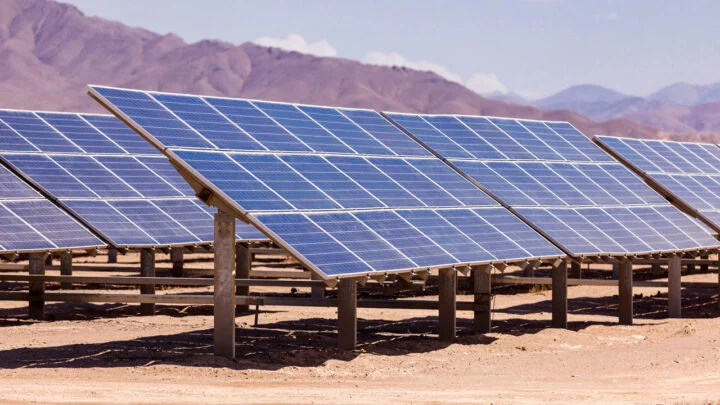
Installed capacity has grown from 120 megawatts to roughly 300 megawatts, while an additional 3.7 gigawatts is in the pipeline, signalling a significant shift toward domestic production and reduced reliance on imports.
The Managing Director of the Rural Electrification Agency, Abba Aliyu, revealed the figures during a webinar hosted by the African Association of Energy Journalists and Publishers. He attributed the growth to targeted government policies designed to attract private investment and strengthen the sector.
According to him, Nigeria’s renewable energy space has gained strong investor confidence, with about $425 million committed in 2025 alone for the development of eight manufacturing facilities. The results are already visible locally produced solar panels are now being exported from Lagos to Accra, marking a new phase in Nigeria’s industrial and energy ambitions.
Aliyu described the development as a turning point, noting that Nigeria is no longer just a consumer of renewable technology but an emerging producer with influence across West Africa.
A key driver of this momentum has been regulatory reform. The Nigerian Electricity Regulatory Commission recently introduced updated mini-grid rules for 2026, significantly expanding allowable capacity. Standalone mini-grids can now operate at up to 5 megawatts, while interconnected systems can reach 10 megawatts opening the door for larger, more commercially viable projects.
These changes, Aliyu explained, have simplified licensing processes, clarified how mini-grids integrate with the national grid, and streamlined environmental compliance requirements. The result is a more predictable and attractive environment for investors.
Beyond domestic impact, the expanded capacity could unlock cross-border electricity trade. Large solar installations in border regions, he noted, could supply power to neighbouring countries, deepening regional energy cooperation.
He also highlighted the importance of complementing existing grid integration efforts led by the West African Power Pool with a more flexible, off-grid electricity market that connects underserved communities across borders.
Nigeria’s approach to electricity access is already drawing attention across the continent. Countries including Mozambique, Benin Republic, Burkina Faso, Niger, Chad, Mauritania, and Mauritius are studying the model as they explore ways to expand their own energy access.
Central to this strategy is the Distributed Access through Renewable Energy Scale-Up programme, widely regarded as one of the largest publicly funded renewable energy access initiatives globally. The project aims to connect 17.5 million Nigerians to electricity by delivering over 2.5 million household connections and deploying 1,350 mini-grids, including 250 interconnected systems.
Structured around a results-based financing model, the programme requires private developers to commit capital upfront before accessing incentives—an approach that has already begun to unlock large-scale funding.
Backed by $750 million in initial funding, the initiative is expected to attract an additional $1.1 billion in private investment. Financial institutions such as Citibank Nigeria, Lotus Bank, and the International Finance Corporation are among those supporting the effort, alongside development finance and impact investment partners.
Aliyu said the early traction underscores growing confidence in Nigeria’s renewable energy framework and positions the country as a model for large-scale clean energy deployment across Africa.
With manufacturing expanding, regulations evolving, and financing flowing in, Nigeria’s renewable energy sector appears to be entering a defining phase, one that could reshape not only its own power landscape but also the future of energy access across West Africa.