Nigeria’s fragile economy could face renewed strain if former U.S. President Donald Trump follows through with his threat to impose additional tariffs on countries aligning with BRICS, a growing bloc of emerging economies.
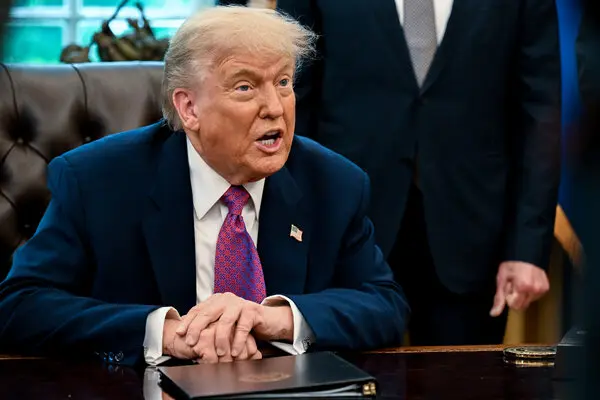
Trump, on Sunday, issued a warning via his Truth Social platform, declaring that any country supporting BRICS or its “anti-American” policies would face an additional 10% tariff, without exception.
“Any country aligning themselves with the Anti-American policies of BRICS will be charged an ADDITIONAL 10% Tariff. There will be no exceptions to this policy,” Trump wrote.
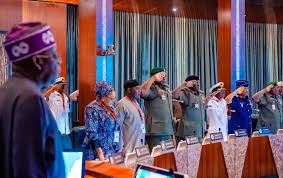
The statement comes just as President Bola Tinubu arrived in Rio de Janeiro, Brazil, for the 17th BRICS Summit, held at the invitation of Brazilian President Luiz Inacio Lula da Silva.
Nigeria’s Role in BRICS
Nigeria was formally recognised as a BRICS partner country in January 2025, following a decision made at the 16th BRICS Summit in October 2024. As a partner not a full member Nigeria is allowed to participate in BRICS meetings and initiatives and contribute to policy discussions and official documents. This marked an upgrade from the previous guest status Nigeria held for several years.
The BRICS bloc, originally formed by Brazil, Russia, India, China, and South Africa, expanded in 2024 to include Egypt, Ethiopia, the United Arab Emirates, Iran, Saudi Arabia, and Indonesia, bringing its total membership to 11 nations.
Economic Vulnerability at Stake
Nigeria, Africa’s largest economy, is already grappling with high inflation, currency volatility, and heavy dependence on oil exports. Its economy slipped significantly after 2023, when headline inflation hit 28.92%, up from 18.85% in 2022. Inflation surged further to 34.2% in June 2024, before dropping to 27.50% in mid-2025, following monetary tightening by the Central Bank of Nigeria (CBN).
While efforts by the CBN such as the removal of fuel subsidies and the floatation of the naira aimed to stabilize the economy, the threat of U.S. tariffs could derail recovery efforts.
Potential Impact of Tariffs
The United States is a major trading partner for Nigeria, particularly in the energy sector. Crude oil and petroleum products account for over 90% of Nigeria’s exports to the U.S. Other exports include fertiliser, agricultural produce, and manufactured goods.
An additional 10% tariff could significantly disrupt this trade, especially as Nigeria attempts to diversify its export base beyond oil. Analysts warn that non-oil exports already minimal could be further discouraged, stifling growth in Nigeria’s manufacturing and agricultural sectors.
BRICS Pushes Back
During the ongoing summit in Brazil, BRICS nations have strongly condemned Trump’s threats, with a joint statement warning against the rise of “unilateral tariff measures,” which they say jeopardize global economic stability.
“We voice serious concerns about the rise of indiscriminate tariffs and unilateral economic coercion,” the BRICS communique stated, while also denouncing recent Israeli-U.S. strikes on Iran.
In response, Trump doubled down, reaffirming his stance and reiterating his deadline of August 1 for trade partners to strike “acceptable deals” or face punitive tariffs.
Outlook and Concerns
While Nigeria’s share of U.S. trade remains relatively small compared to America’s global trade volume, the impact on Nigeria could be significant due to its limited export diversification and dependence on U.S. dollar revenues from oil.
Experts warn that the proposed tariffs could undermine Nigeria’s economic reform agenda and further strain efforts to stabilise inflation and grow GDP, which has averaged just 2.3% over the past decade.
With global geopolitical tensions rising and Nigeria walking a delicate line between global economic alliances, policy decisions made in Washington could ripple deep into Africa’s most populous nation.