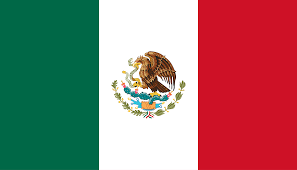
The Mexican government has revised its economic growth forecast for 2025, citing persistent global uncertainty and mounting trade tensions with the United States, its largest trading partner.
In a statement released Monday, Mexico’s Ministry of Finance and Public Credit downgraded its growth projection to between 0.5% and 1.5%, a significant drop from the 1.5% to 2.3% forecast issued in April. The revision reflects concerns over declining exports and strained bilateral relations, driven largely by a new wave of tariffs imposed by U.S. President Donald Trump.
Washington’s aggressive trade policies, including tariffs on key Mexican exports such as automobiles and steel, have cast a shadow over a trading relationship that accounted for more than $800 billion in bilateral commerce last year.
The new outlook aligns more closely with market sentiments and projections from the Bank of Mexico, which has forecast growth in the range of 0.4% to 0.6% for the same period.
Despite the challenges, the finance ministry remains cautiously optimistic, projecting a rebound in 2026, with GDP expected to grow between 1.8% and 2.8% though this figure remains above current estimates by both the central bank and most analysts.
“The Mexican economy will continue to show resilience thanks to strong household consumption, domestic investment, and the country’s strategic position in global value chains,” the ministry said in its report.
Latin America’s second-largest economy grew 1.2% in 2024, but external pressures and shifting political dynamics have dampened expectations moving forward.
Focus on Social Investment
In the same announcement, the finance ministry revealed plans to dedicate 3% of GDP in 2026 to social welfare programmes, which are expected to directly benefit nearly 82% of Mexican families.
A cornerstone of President Claudia Sheinbaum’s economic policy, the social investment plan includes expanded cash transfer programs targeting vulnerable communities, aimed at alleviating poverty and boosting domestic consumption.
While critics question the long-term sustainability of these subsidies, government officials argue that increased social spending will support internal economic momentum, especially as external trade remains unpredictable.
Looking Ahead
With Mexico facing headwinds from its northern neighbor and tighter monetary conditions globally, the government’s downward revision appears to be a strategic pivot toward domestic economic resilience.
Analysts say continued investment in infrastructure, regional supply chains, and inclusive welfare programs could help cushion the blow of external shocks but caution that trade relations with the U.S. will remain a key risk factor in the near term.