The Guild of Medical Directors has called on the Federal and state governments to enforce compulsory health insurance across the country, warning that enrolment of less than 25 per cent of Nigerians is limiting access to essential healthcare services and contributing to preventable deaths.
The guild said expanding health insurance coverage to at least 75 per cent of the population would reduce the financial burden of medical treatment, improve healthcare delivery and ensure more Nigerians could access quality services.
The call was made at the Annual General Meeting and Conference of the Guild of Medical Directors in Enugu, themed, “The Business of Medicine in the Present Economic and Security Challenges in Nigeria,” with a sub-theme focusing on the adoption of digital health, telemedicine, electronic medical records and artificial intelligence tools.
Delivering the keynote address, the Chief Medical Director of Memfys Hospital for Neurosurgery, Enugu, Emeritus Professor Samuel Ohaegbulam, said compulsory health insurance, implemented through the National Health Insurance Authority, would help address the growing number of Nigerians unable to afford medical treatment.
He lamented that economic hardship and rising healthcare costs had left many patients unable to settle their medical bills, forcing some to seek treatment on credit.
Ohaegbulam urged doctors and other healthcare professionals to support the expansion of the insurance scheme, while calling for increased public awareness through traditional and digital media, religious institutions and community organisations.
He also identified insecurity, high electricity costs and the migration of skilled medical professionals as major challenges threatening the sustainability of healthcare delivery in Nigeria.
The neurosurgeon said inadequate remuneration and difficult economic conditions were forcing trained specialists to seek better opportunities abroad, resulting in the loss of valuable medical expertise despite the huge resources invested in their training.
Similarly, the outgoing National President of the Guild of Medical Directors, Dr Raymond Kuti, expressed concern that fewer than 25 per cent of Nigerians were covered by health insurance despite more than two decades of the scheme’s existence.
Kuti noted that most enrolled beneficiaries were government employees, leaving a significant proportion of Nigerians working in the informal sector without adequate insurance coverage.
He attributed the low enrolment to a lack of public confidence, transparency and accountability, stressing that many Nigerians were uncertain about receiving adequate value for their contributions.
The outgoing president called for stronger regulatory oversight of the National Health Insurance Authority, arguing that federal and state governments should concentrate on regulating the scheme rather than participating as healthcare practitioners.
He also advocated regular publication of monitoring reports by relevant government agencies to promote transparency and restore public confidence.
Kuti further urged health insurance administrators to ensure prompt reimbursement of hospitals for services provided, at rates that reflect the actual cost of delivering quality healthcare.
He said private hospitals were struggling with high operating expenses, including rising electricity tariffs, expensive medical equipment, high interest rates on bank loans and multiple taxation by federal, state and local governments.
To address these challenges, he proposed a government-backed loan guarantee scheme to support private hospitals in acquiring medical equipment, essential medical supplies and renewable energy systems.
Under the proposal, he said the government could provide subsidies of up to 30 per cent of the purchase cost or guarantee an equivalent portion of loans, with repayment periods not exceeding five years.
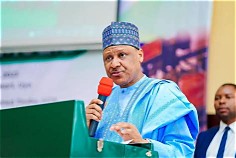
The Enugu State Governor, Peter Mbah, represented by the Commissioner for Health, Professor George Ugwu, reaffirmed his administration’s commitment to strengthening healthcare delivery through investments in modern hospital infrastructure, medical equipment and improved welfare for health workers.
Ugwu disclosed that the state was also working towards increasing the production of healthcare professionals, with plans to train at least 1,000 doctors and 3,000 nurses annually.
He further revealed that the state government was preparing legislation to ensure compulsory enrolment of all residents in its health insurance scheme.
The commissioner said the administration was also pursuing policies to improve electricity supply to households and industries as part of broader efforts to strengthen the state’s economic and healthcare sectors.