Macron and Merz Meet in Berlin to Coordinate Strategy on NATO and Looming US-EU Trade Clash

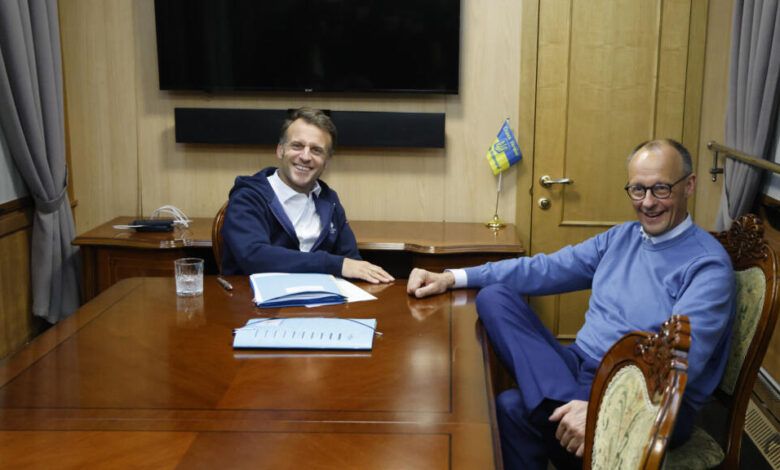
French President Emmanuel Macron and German Chancellor Friedrich Merz held high-level talks in Berlin on Wednesday, aiming to reinforce Franco-German unity as tensions escalate between the European Union and the United States over trade, security, and defense.
The working dinner between the two leaders comes at a crucial moment, as President Donald Trump threatens to impose 30% tariffs on EU goods if a new trade agreement isn’t reached by August 1 — a move that could plunge transatlantic relations into fresh turmoil.
Since assuming office in May, Merz has prioritized strengthening the core EU alliance with France. His meeting with Macron underscored shared concerns over US protectionism and a need for European strategic autonomy — particularly in areas such as defense, technology, and energy security.
“Bilateral convergence — whether in defense, energy transition, AI, or quantum technology — is absolutely essential to achieving critical mass and driving innovation,” Macron said before the talks.
The EU-US trade dispute topped the agenda, with Macron favoring a firmer Brussels stance to counter Washington’s tariff threats, while Merz — reflecting a more traditional German position — urged de-escalation and continued dialogue.
Despite these nuanced differences, the two leaders emerged from their talks with a unified message. Merz’s spokesperson said both sides “highlighted their shared vision of the negotiations” and agreed that Europe should keep all trade instruments on the table if discussions with the U.S. fail.
“They are prepared to consider new measures and reserve other trade tools if necessary,” the spokesman added, suggesting a readiness to act should diplomacy falter.
The leaders also reaffirmed their joint support for Ukraine and efforts to strengthen European defense under NATO’s umbrella, alongside the UK and Poland. Their meeting comes as part of a broader Franco-German effort to present a cohesive front in EU policymaking amid geopolitical instability.
While Macron continues to push for a more sovereign Europe less dependent on American defense guarantees, Merz has sought to balance transatlantic loyalty with the realities of Europe’s growing need for self-reliance — particularly in light of shifting US priorities.
The meeting is expected to shape the EU’s stance heading into key trade talks with Washington and could serve as a litmus test for how united Europe can remain under external pressure.