Aviation minister says subsidy removal has improved liquidity, helping government raise $500m for Lagos airport reconstruction……
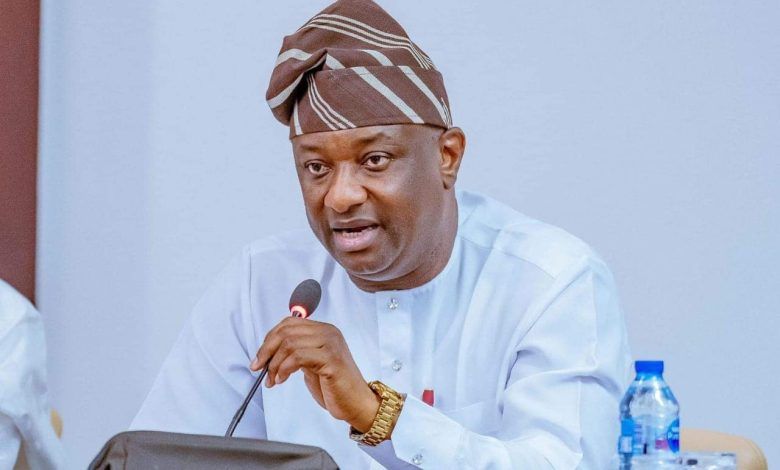
Nigeria’s aviation infrastructure suffered decades of underinvestment because a large portion of the country’s oil earnings was channelled into fuel subsidies, the Minister of Aviation and Aerospace Development, Festus Keyamo, has said.
Keyamo made the assertion on Monday while speaking at an event marking the 67th anniversary of Aero Contractors.
The minister said the prolonged funding gap was particularly evident at the Murtala Muhammed International Airport in Lagos, which, despite serving as Nigeria’s main international gateway, had seen limited major redevelopment over the years.
He noted that the airport was originally built in 1977 and questioned why successive governments had struggled to undertake major reconstruction and development projects at the country’s key airports.
According to Keyamo, the challenge was largely financial, as government revenue was insufficient to fund major infrastructure projects.
He said four major airport terminals in Lagos, Abuja, Kano and Port Harcourt were eventually developed with Chinese loans, while the terminal in Enugu was funded through budgetary allocations.
“We could not raise money to do anything in the last 50 years, because there was no money,” the minister said, explaining that much of the country’s oil revenue had been absorbed by fuel subsidies.
He said the government was also spending resources to suppress the naira, arguing that the combination of subsidised petrol and foreign exchange had prevented prices from reflecting their actual economic costs.
Keyamo described the former system as “the real audio money”, saying Nigerians were effectively accessing petrol and foreign exchange at prices that did not reflect their true costs.
The minister said the removal of fuel and foreign exchange subsidies under President Bola Tinubu had changed the government’s financial position and created greater room for investment.
According to Keyamo, the reforms have increased liquidity and strengthened investor confidence, allowing the government to mobilise significant funding for aviation infrastructure without taking on additional loans for some of the projects.
He said the government was able to raise $500 million in less than two years for the reconstruction of the Lagos airport following the removal of the subsidies.
“In less than two years, after we removed subsidies from both money and fuel, the president could raise $500 million to rebuild Lagos. Not money borrowed,” he said.
Keyamo also said Nigeria’s foreign reserves had risen from about $3 billion to $56 billion, adding that the improved financial position was encouraging investors to return to the country.
He said the government had approved additional airport infrastructure projects, including runway resurfacing works in Kano, Port Harcourt and Akure.
“We didn’t borrow money. That is how the Renewed Hope agenda is affecting the aviation sector positively,” he added.
Beyond infrastructure, Keyamo said the administration was pursuing policies aimed at making it easier for Nigerian airlines to acquire and lease aircraft.
He cited Nigeria’s compliance with the Cape Town Convention as one of the measures designed to improve access to aircraft financing and leasing arrangements.
The minister said the policies had contributed to the emergence of new airlines backed by sub-national governments, while existing domestic carriers were expanding into regional and international markets.
He maintained that the government’s economic reforms were not arbitrary measures, but difficult decisions that successive administrations had considered necessary to address longstanding structural problems.
Keyamo also pledged government support for Aero Contractors as the airline seeks to expand its fleet and operations.
He expressed hope that the airline would eventually expand its network to international destinations, including New York, London and Canada.
The minister said the broader objective was to create an aviation sector capable of supporting economic growth while giving Nigerian airlines the infrastructure, financing and policy environment needed to compete beyond the domestic market.