
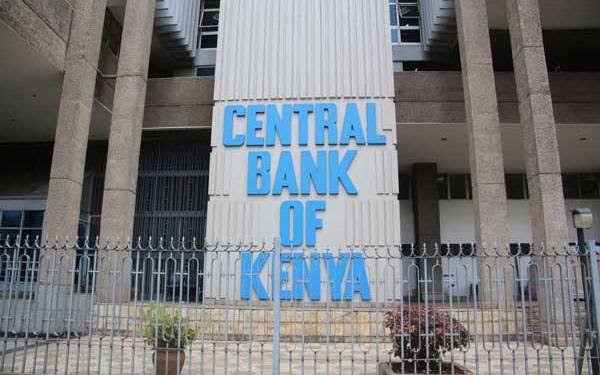
Central bank data show reserves dropping to $13.95bn, although the country retains a buffer above its four-month statutory import cover requirement……
Kenya’s external financial buffer came under pressure in the week to November 19, 2026, after the country’s foreign-exchange reserves declined by $656 million, pushing its import cover lower despite remaining above the minimum threshold set by the central bank.
Data from the Central Bank of Kenya’s (CBK) Weekly Bulletin, published on November 20, showed that foreign reserves dropped from $14.605 billion to $13.949 billion within the one-week period.
The decline also reduced the country’s import cover from 5.9 months to 5.6 months, equivalent to approximately five months and 18 days of import financing.
Although the latest figures indicate a reduction in Kenya’s external reserves, the balance remains above the central bank’s statutory requirement of four months of import cover, providing some protection against external payment pressures.
The latest movement represents a $656 million reduction in the resources available to support international trade payments and other foreign obligations.
Kenya’s shilling remains stable
Despite the decline in reserves, the Kenyan shilling maintained its value against the US dollar during the period under review.
The CBK bulletin showed that the local currency traded at $0.00769 on November 19, unchanged from its position a week earlier.
Commenting on the decline, independent analyst Wycliffe Ochieng said significant weekly movements in foreign reserves could occur when large external payments fall due within a short period.
“A single-week drop of this magnitude is not unusual when large import invoices or debt repayments fall due,” Ochieng said.
He explained that the more important consideration was whether the country’s import cover remained comfortably above the four-month benchmark and whether the shilling began experiencing prolonged pressure.
Attention is now expected to shift to subsequent reserve reports to establish whether the latest reduction represents a temporary adjustment or the beginning of a more sustained decline in Kenya’s external buffers.
Money market liquidity remains strong
While foreign-exchange reserves recorded a decline, conditions in Kenya’s domestic money market remained relatively stable, according to the central bank.
Commercial banks maintained average excess reserves of $157.7 million above the statutory cash reserve requirement of 3.25 per cent.
The Kenya Shilling Overnight Interbank Average (KESONIA), a benchmark for short-term lending between banks, also remained unchanged at 8.75 per cent during the week.
The government securities market recorded healthy investor participation, with Treasury bill and bond auctions attracting bids exceeding the amounts offered by the government.
Ochieng said investors would be paying close attention to the direction of foreign reserves in the coming weeks, particularly whether the country could rebuild its external buffers.
“Investors will watch the trajectory over the next few weeks,” he said.
He added that improved export earnings, remittance inflows and concessional financing could help stabilise reserves and limit any negative impact on investor confidence.
The CBK, meanwhile, maintained that its interventions in the foreign-exchange market are aimed at moderating excessive volatility rather than maintaining the shilling at a specific exchange-rate level.
Nigeria also records decline in foreign reserves
Kenya’s latest reserve movement comes amid a similar development in Nigeria, where external reserves have also come under pressure following a period of significant accumulation.
Nigeria’s gross external reserves declined by $390.94 million within 16 days to $54.87 billion as of November 12, 2026, representing the largest reduction over a comparable period since April.
Figures from the Central Bank of Nigeria showed that reserves fell from $55.26 billion on October 27 to $54.87 billion on November 12, representing a decline of approximately 0.71 per cent.
The reduction followed months of reserve growth, although Nigeria’s external position remained considerably stronger than its level at the beginning of the year.
Despite the latest setback, the country’s reserves were still $9.31 billion above the $45.57 billion recorded in January 2026.
The movements in both countries highlight recent changes in their external financial positions, although Kenya continues to maintain import cover above its statutory minimum, providing a buffer against immediate external financing pressures.


