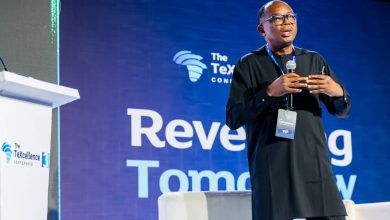
FG Targets 90,000km Fibre Network, 3,700 Towers to Deepen Nigeria’s Digital Economy – Tijani


The Federal Government says it is investing heavily in digital infrastructure, including a 90,000-kilometre fibre-optic network and about 3,700 telecommunications towers, as part of efforts to deepen connectivity and accelerate Nigeria’s digital economy.
The Minister of Communications and Digital Economy, Bosun Tijani revealed this while speaking at the National Innovation Hub Standards Framework in Abuja.
Bosun said the investments are aimed at expanding access to telecommunications, strengthening digital infrastructure and creating an enabling environment for innovation and technology-driven businesses across the country.
Speaking on the importance of digital infrastructure, the Minister explained that technological development rests on three critical layers: foundational infrastructure, technology systems and applications developed by innovators.
“The foundational layer includes fibre-optic networks, satellites, telecommunications towers and data centres, which provide the infrastructure required for a digital economy to function effectively.
“The second layer comprises systems such as digital identity, data exchange and interbank settlement platforms, which enable businesses and innovators to develop solutions and services.
“The third layer, he explained, is where technology innovators build applications designed to improve businesses, public services and everyday life,” he explained.
He cited Nigeria’s telecommunications liberalisation in 1999 and the development of the country’s interbank settlement system as examples of investments that helped create the conditions for the growth of the nation’s fintech ecosystem.
He said the combination of improved connectivity, financial infrastructure and identity systems had enabled Nigerian technology companies to develop solutions that have gained international recognition.
“By enriching those two layers, the people who are building at the top will always struggle,” he said, stressing the need for continued government investment in both infrastructure and innovation.
“The planned 90,000-kilometre fibre-optic network is expected to rank among the longest on the African continent when completed, with implementation scheduled to commence in October, he added.
He further disclosed plans to install nearly 3,700 telecommunications towers to extend coverage to underserved communities.
“More than 20 million Nigerians currently live in communities without access to telecommunications services.
The Minister shared his recent experience in the Niger Delta, where he said he travelled by boat to Koko and could not receive messages for several hours because of the absence of network coverage.
He said: “Satellite technology would also be important in reaching locations where conventional telecommunications infrastructure, including towers and fibre, may be difficult to deploy.
“Efforts are ongoing to strengthen Nigeria’s digital identity ecosystem and establish policies to support emerging technologies, including cloud computing.”
However, he stressed that investment in infrastructure alone would not be enough to transform the economy without adequate support for technology hubs, entrepreneurs and innovators.
The Minister called for greater investment in innovation hubs across the country, arguing that stronger support structures would enable more entrepreneurs outside Lagos to develop successful businesses.
He said successful technology businesses could contribute significantly to economic growth through job creation, taxation and the development of solutions to societal challenges.
“Our ambition of building a $1 trillion economy cannot be achieved through oil and gas alone, but would require the growth of technology-driven businesses and other productive sectors.”
He therefore urged stakeholders to strengthen the ecosystem supporting innovators and ensure that lessons from successful technology hubs are documented and replicated across the country.