El Salvador Backs Indefinite Presidential Re-Election, Extends Terms to Six Years

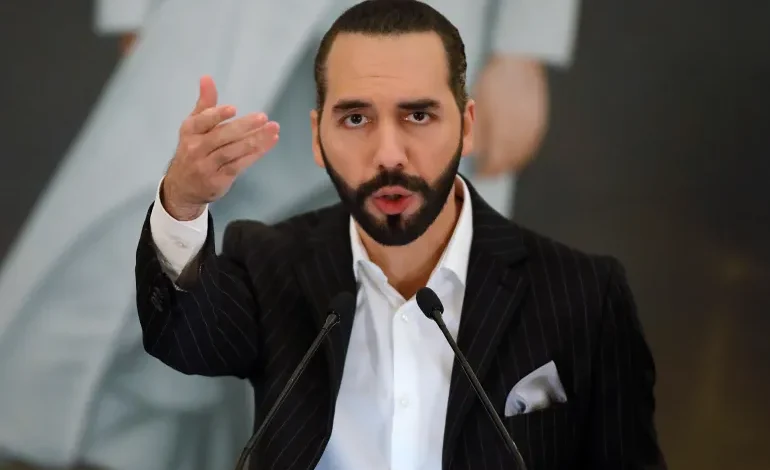
El Salvador’s Legislative Assembly has passed sweeping constitutional amendments that will allow indefinite presidential re-election and extend presidential terms from five to six years, further consolidating the power of President Nayib Bukele and his ruling New Ideas party.
The changes, introduced by lawmaker Ana Figueroa, amend five articles of the constitution and abolish the second-round runoff system in presidential elections, enabling candidates to win outright in the first round regardless of vote share.
With Bukele’s party holding a commanding supermajority, the package was swiftly approved with 57 votes in favor and only three opposed.
Bukele, who once branded himself “the world’s coolest dictator,” already defied a constitutional ban on re-election last year when justices appointed by his allies on the Supreme Court ruled in 2021 that he could seek a second term. He went on to claim a resounding victory in 2024.
Critics say Thursday’s reforms confirm long-standing fears of a creeping authoritarian project. Concerns have persisted since 2021, when Bukele’s party used its legislative dominance to oust the constitutional chamber of the Supreme Court — widely considered the last institutional check on his presidency.
The changes drew sharp rebukes from opposition lawmakers, who framed the move as a dangerous erosion of democratic norms.
“Democracy in El Salvador has died,” declared Marcela Villatoro of the conservative Nationalist Republican Alliance (Arena), one of just three lawmakers to oppose the bill. “Indefinite re-election weakens democracy, fuels corruption and nepotism, and concentrates power in dangerous ways.”
But Bukele’s allies defended the reforms as an affirmation of the popular will.
“Power has returned to the only place it belongs — to the Salvadoran people,” said Suecy Callejas, vice president of the Assembly.
Bukele himself offered no immediate public reaction.
The reforms also propose synchronizing presidential and legislative elections by shortening Bukele’s current term, due to end in 2029, to 2027. That change would enable him to seek a longer new mandate two years earlier than expected.
Bukele’s political dominance has grown in tandem with his hardline crackdown on powerful street gangs, a campaign that has driven crime rates down sharply and cemented his popularity across El Salvador. His approach has inspired political imitators across Latin America, despite criticism from rights groups over mass detentions and prison conditions.
While the Biden administration initially expressed alarm at Bukele’s accumulation of power, Washington’s tone shifted to muted acceptance ahead of his re-election. With Donald Trump’s return to the White House in January, Bukele secured a new ally.
He quickly sought favor by agreeing to accept over 200 foreign deportees into El Salvador’s newly built mega-prison for gang members.