
Dutch Government Collapses as Wilders Quits Coalition Over Migration Dispute

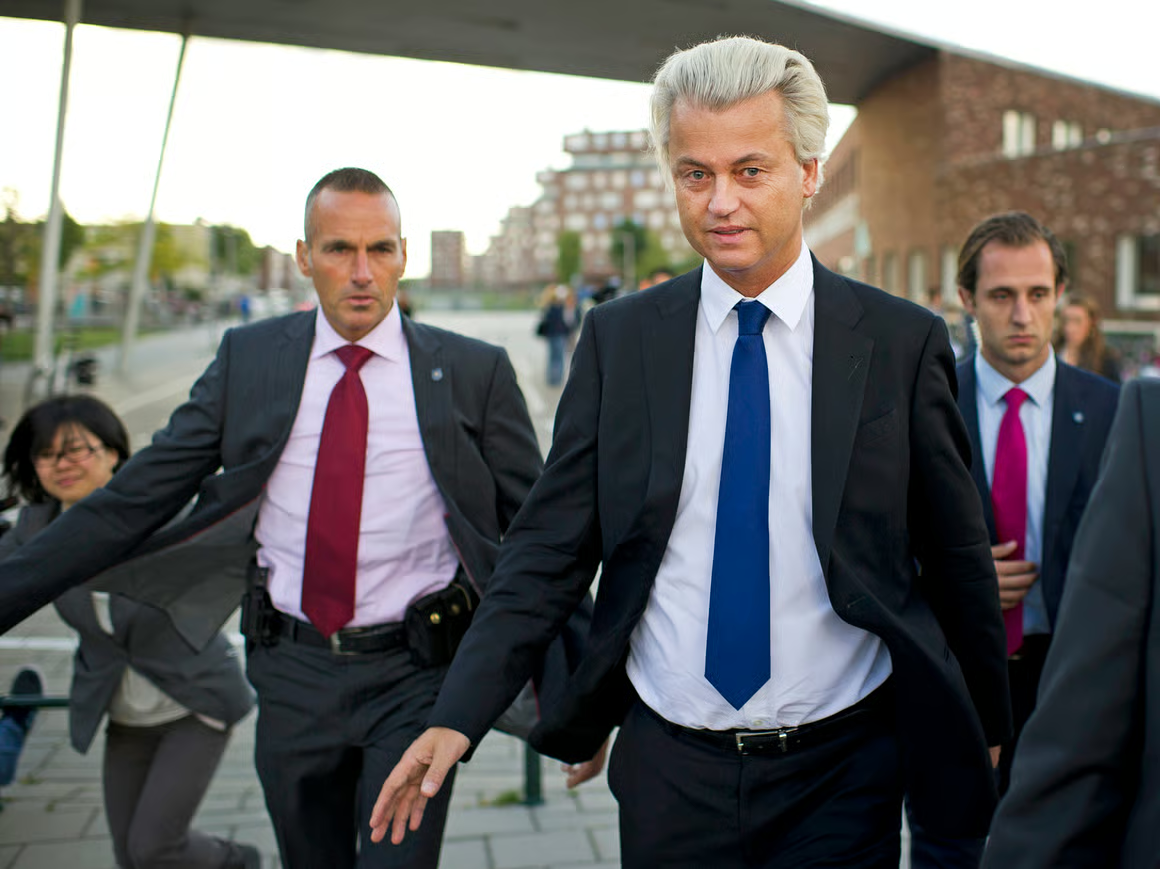
The Dutch government has collapsed after far-right leader Geert Wilders withdrew his Party for Freedom (PVV) from the coalition amid a bitter dispute over migration policies.
Prime Minister Dick Schoof confirmed his resignation on Tuesday and submitted the cabinet’s resignation to King Willem-Alexander.
In a televised address following an emergency cabinet meeting, Schoof described Wilders’ move as “irresponsible and unnecessary,” lamenting that “this shouldn’t have happened.” The fragile coalition, formed less than a year ago, unraveled after Wilders demanded ten new asylum restrictions, including freezing applications, halting reception centre construction, and limiting family reunification.
Despite Schoof’s last-minute appeal to coalition partners, the meeting lasted just a minute before Wilders walked out, declaring on X (formerly Twitter), “No signature for our asylum plans. PVV leaves the coalition.”
The collapse sparked shock and anger among political leaders, many of whom pointed out that several of Wilders’ demands echoed policies already agreed upon in the coalition pact. Legal concerns had already led to the dismissal of some of Wilders’ additional proposals during coalition negotiations.
The coalition, born in July 2024 after months of intense post-election negotiations, brought together the far-right PVV as the largest party, alongside the conservative-liberal VVD, the Farmers’ Citizen Movement (BBB), and the centrist New Social Contract. From the outset, the alliance was seen as a marriage of convenience, plagued by infighting and struggling to advance its agenda.
Wilders’ former partners accused him of deliberately engineering the crisis. VVD leader Dilan Yesilgoz branded the move “superirresponsible” and said, “This wasn’t about asylum at all.” Deputy Prime Minister Mona Keijzer from the BBB accused Wilders of betraying the country.
Undeterred, Wilders declared his ambition to become prime minister and vowed to expand PVV’s influence in upcoming elections.
Economists like Sandra Philippen of ABN AMRO believe the government’s collapse will have limited immediate economic impact, citing that the administration “barely made any concrete plans” during its 11 months in power.
With migration and cost-of-living concerns fueling political volatility across Europe, polls show the far right and Green-Left parties are virtually tied. Analysts such as Armida van Rij of Chatham House suggest Wilders deliberately triggered the collapse to arrest his party’s declining support.
As the Netherlands prepares to host the NATO summit later this month in The Hague, Schoof’s cabinet will remain in caretaker mode until new elections—likely slated for autumn—are held.
In the Dutch political system, becoming prime minister requires forming a majority coalition in the 150-seat parliament.
While Wilders may still surpass expectations in the polls, his decision to topple the government is widely viewed as reckless, risking alienation from potential coalition partners who already mistrust his leadership.
By forcing the government’s fall over asylum policy, Wilders is expected to make immigration a central theme of his next campaign.
However, having already held responsibility for these policies for nearly a year, there is no certainty that this gamble will translate into electoral gains.


