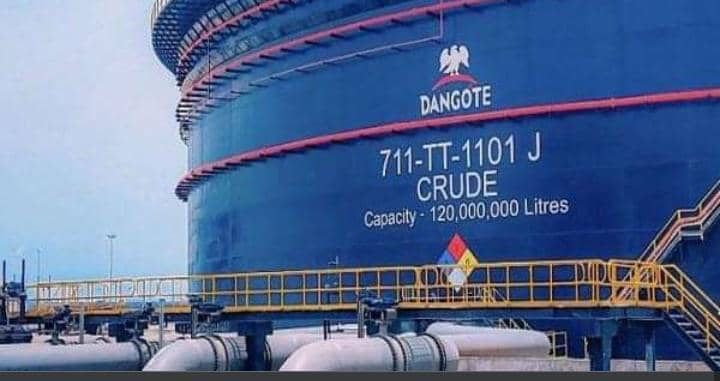
Dangote Petroleum Refinery and Petrochemicals has announced a reduction in its ex-depot (gantry) loading cost of petrol from ₦880 to ₦865 per litre. This price cut, which took effect on Thursday, was confirmed by an official from the refinery in a conversation with journalists.
Filling stations with special agreements with Dangote Refinery, such as MRS Oil & Gas, Ardova Plc, and Heyden, are expected to adjust their pump prices to approximately ₦910 per litre, reflecting the new ex-depot price.
This move follows a crucial meeting held earlier in the week between representatives of the Dangote Refinery and Wale Edun, Nigeria’s Minister of Finance. At the meeting, the government reiterated that the Naira-for-crude policy would continue, despite previous changes under the leadership of the former NNPCL boss, Mele Kyari.
The Naira-for-crude initiative, initially launched in July 2024 by the Federal Executive Council, mandates that crude oil be sold to local refineries, including Dangote, in Naira rather than in U.S. dollars. The aim of this policy is to ease the pressure on the country’s foreign exchange reserves and stabilize fuel prices domestically.
In March 2025, NNPCL temporarily halted the sale of crude to Dangote Refinery in Naira due to challenges in matching sales proceeds with crude oil purchase obligations, which were denominated in U.S. dollars. As a result, the Dangote Refinery increased petrol prices, pushing the cost from around ₦860 per litre to about ₦1,000 per litre, causing significant concern among consumers.
However, with the recent resumption of the Naira-for-crude agreement, Dangote Refinery is now back on track to sell petroleum products locally in Naira. This shift is expected to reduce the burden of dollar-denominated fuel imports, providing Nigerians with some relief from rising fuel costs.
The Dangote Refinery, a $20 billion project commissioned in May 2023, had paused its Naira sales while awaiting crude deliveries from NNPCL in the local currency. The continuation of this policy is anticipated to stabilize fuel prices and mitigate the need for dollar-backed imports, benefiting both consumers and the overall economy.