Nigeria Maintains Cheaper Petrol Prices Despite Global Surge….
Nigeria has managed to retain one of the lowest petrol prices globally, even as international markets reel from rising crude oil costs triggered by geopolitical tensions in the Middle East.
Latest data from GlobalPetrolPrices.com shows that petrol in Nigeria currently averages $0.88 (₦1,191.39) per litre well below the global average of $1.32 (₦1,787.08). This places the country among the more affordable fuel markets worldwide, despite recent upward price adjustments.
Across major economies, fuel prices remain significantly higher. Petrol sells for about $1.075 in the United States, $1.095 in India, and $1.189 in South Africa. The gap widens further in developed markets such as the United Kingdom, France, and Germany, where pump prices exceed $1.80 and climb above $2 per litre. In Hong Kong, prices are as high as $3.967 per litre.
Within West Africa, Nigeria also stands out as a relatively cheaper market. Petrol prices are higher in Togo, Benin, Ghana, and Cameroon, reinforcing Nigeria’s position as a regional outlier in terms of affordability.
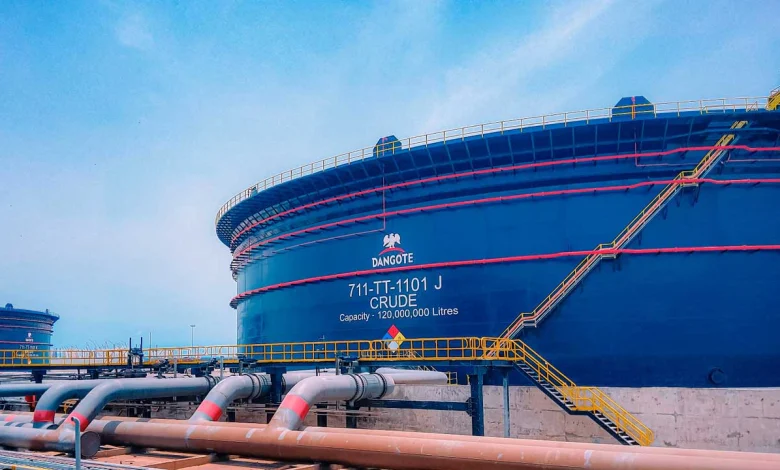
Industry analysts attribute this relative stability largely to the growing influence of the Dangote Petroleum Refinery and Petrochemicals. The refinery has played a key role in moderating domestic price volatility by absorbing part of the global cost pressures while maintaining steady fuel supply.
This role has become increasingly critical as many countries grapple with supply shortages, rationing, and sharp price spikes following disruptions linked to tensions involving Iran and key global supply routes.
A notable insight from the data is that only a handful of countries globally sell petrol below $1 per litre and most of them rely on subsidies or strict price controls. Nigeria, however, operates a deregulated downstream sector following the removal of fuel subsidies in 2023, meaning prices are largely determined by global oil trends and exchange rates.
Despite this, domestic petrol prices have risen by an estimated 35–40% since the onset of the current crisis still lower than increases recorded in countries like Cambodia and Vietnam, where prices have surged by over 67% and 49% respectively.
Analysts say that without the scale and capacity of the Dangote refinery, Nigeria would likely be facing far steeper fuel costs, increased pressure on foreign exchange, and potential supply shortages. Instead, local refining has helped strengthen energy security, soften price shocks, and keep Nigeria relatively stable in an otherwise volatile global fuel market.
As global uncertainties persist, Nigeria’s ability to maintain comparatively lower petrol prices underscores the growing importance of domestic refining capacity in shielding economies from external shocks.