Brazil Court Ousts Football Chief Ednaldo Rodrigues Over Contract Flaws

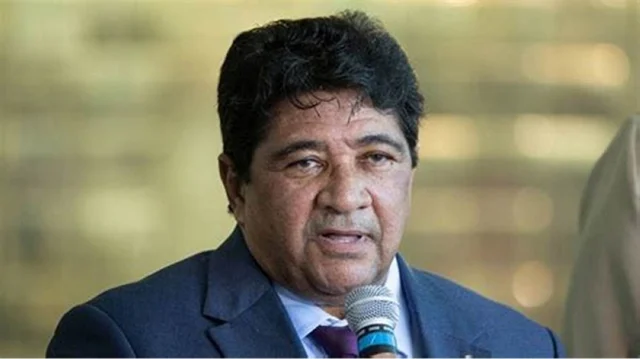
The leadership of Brazilian football has been plunged into fresh turmoil after a Rio de Janeiro court ordered the dismissal of Ednaldo Rodrigues, President of the Brazilian Football Confederation (CBF), citing legal flaws and irregularities in his contract.
The ruling, delivered on Thursday, declared the employment agreement binding Rodrigues to the CBF “null and void,” highlighting irregularities in the 2025 extension — including a claim that one of the contract’s signatories was mentally unfit to approve the deal, raising concerns of possible forgery.
This is not the first time Rodrigues’ presidency has faced legal scrutiny. In 2023, he was temporarily removed from office after a court found irregularities in his 2022 election. He was later reinstated following a ruling by a Supreme Court judge, prompted by threats of sanctions from FIFA, which warned Brazil against political or judicial interference in football governance.
Both FIFA and CONMEBOL (South American Football Confederation) had strongly opposed Rodrigues’ previous ouster, warning that Brazil could face suspension from international competitions if it allowed court rulings to influence the leadership of its football federation.
Rodrigues has been a central figure in CBF’s recent high-profile efforts, including an ambitious — but failed — attempt to recruit Real Madrid manager Carlo Ancelotti to lead Brazil’s national team. That pursuit, which initially fell apart under leadership uncertainty, has now come full circle. Ancelotti was officially named as Brazil’s head coach this week, succeeding Zinedine Zidane, who had briefly held the role.
Despite the court’s decision, Rodrigues — speaking earlier on Thursday at a FIFA executive gathering in Asunción, Paraguay — defended the legitimacy of his contract.
“I have absolute certainty that the document is valid,” he said confidently, just hours before the ruling was made public.
In March 2025, Rodrigues was unanimously reelected to serve as CBF president through 2030, further complicating the political landscape surrounding Brazilian football. The latest court ruling is likely to reignite tensions between the judiciary and international football bodies, which have long warned against what they perceive as undue interference in football administration.
There has been no immediate response from FIFA or CONMEBOL following Thursday’s ruling, but observers warn that this decision could again place Brazil’s participation in global tournaments at risk if viewed as a breach of football’s autonomy principles.