Minister calls for increased investment in research, science and technology to transform continent’s food systems…..
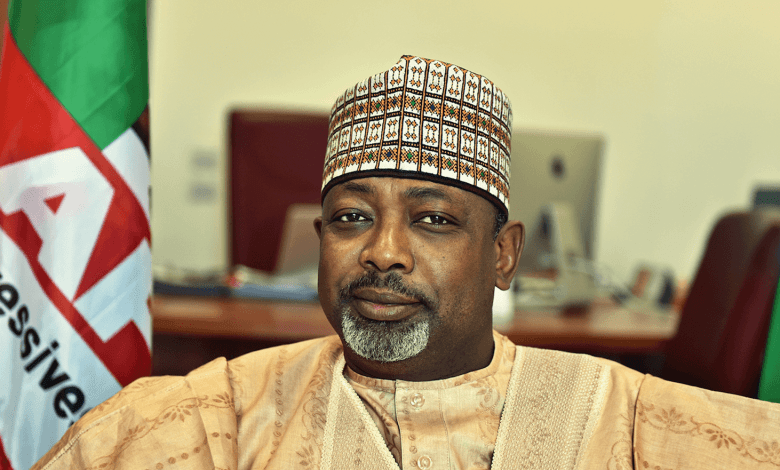
The Minister of Agriculture and Food Security, Abubakar Kyari, has called on African nations to significantly increase investment in science, research and innovation, stressing that the continent must move from being a consumer of agricultural technologies to becoming a global hub for scientific discovery and agricultural solutions.
Kyari made the call on Monday during the opening ceremony of the 9th Africa Agriculture Science Week and the 10th General Assembly of the Forum for Agricultural Research in Africa.
The minister said Africa’s abundant natural resources, including fertile land, diverse ecosystems and rich biodiversity, would not automatically translate into prosperity without deliberate investment in knowledge, innovation and enterprise.
“Africa is richly endowed with fertile lands, diverse ecosystems, abundant biodiversity and one of the youngest populations in the world. Yet history has shown repeatedly that natural resources alone do not create prosperity,” Kyari said.
According to him, sustainable development would only come when knowledge is transformed into innovation, innovation into businesses, and businesses into opportunities that improve the lives of citizens.
Kyari described the Africa Agriculture Science Week as a major platform for advancing agricultural transformation, noting that the event provides an avenue for knowledge sharing, partnership building, policy development and the promotion of scientific solutions for Africa’s agrifood systems.
He said the administration of President Bola Tinubu had placed agriculture at the centre of the Renewed Hope Agenda because food security remains closely linked to national security, economic growth and social stability.
The minister highlighted several government initiatives aimed at strengthening the agricultural sector, including expansion of irrigation and year-round farming, improved access to quality seeds and fertilisers, increased agricultural financing, mechanisation, digital agriculture and support for agro-industrial development.
He also reaffirmed the government’s commitment to strengthening agricultural research through investments in national research institutes, universities, extension services and strategic partnerships.
Kyari noted that science remains the foundation of agricultural progress, as research helps reduce uncertainty, shape effective policies, attract investment and provide farmers with the tools needed to improve productivity.
He pointed to emerging technologies such as artificial intelligence, satellite systems, biotechnology, digital platforms and data science as opportunities that could reshape Africa’s agricultural future.
“Together, these emerging technologies present Africa with an extraordinary opportunity—not simply to adopt innovations developed elsewhere, but to become a global leader in generating agricultural technologies that respond to our own ecological realities, production systems, and development aspirations,” he said.
The minister stressed that achieving this goal would require consistent investment in research institutions, universities, innovation centres, digital infrastructure and scientific talent.
He also called for stronger cooperation between governments, researchers, development organisations, private companies and farmers to address major challenges facing the continent, including climate change, emerging pests and diseases, land degradation, market instability and food insecurity.
“The future of African agriculture will not be determined solely by the size of our farms or the extent of our natural resources. It will be determined by the strength of our institutions, the quality of our science, and our willingness to invest consistently in knowledge,” Kyari said.
He added that agricultural research must move beyond academic publications and produce practical solutions that increase productivity, create employment opportunities, strengthen climate resilience and drive economic development.
Meanwhile, the Minister of Livestock Development, Idi Maiha, said livestock production remains a key component of Africa’s agricultural transformation and food security efforts.
Maiha noted that livestock is often overlooked in discussions about agricultural development despite its importance to rural livelihoods, nutrition and economic empowerment.
“Livestock production is not merely an appendage to agriculture. It is a central pillar of economic empowerment, nutritional security and rural livelihood resilience,” he said.
The minister expressed concern that despite Africa’s large livestock population, many countries on the continent still rely heavily on imported animal protein.
He revealed that Africa has hundreds of millions of cattle, sheep, goats and other livestock species but continues to face challenges in meeting domestic protein demand.
“In Africa, we probably have 350 million cattle, 400 million sheep, 400 million goats, 20 million camels and 50 million pigs. Yet, many of us go hungry. Yet, many of our protein sources from animals are imported into this continent. This is not sustainable,” Maiha said.
He said the Ministry of Livestock Development, established in 2024, was implementing reforms through the National Livestock Master Plan and the National Livestock Growth Acceleration Strategy.
According to him, the government’s goal is to modernise livestock production through sustainable farming systems, infrastructure development, conflict management, stronger value chains and greater private-sector participation.
“We are transitioning from traditional vulnerable practices to commercially viable, climate-smart livestock systems. This transition presents a massive frontier for investment,” he said.
Maiha added that Nigeria was targeting growth of the livestock sector from its current estimated value of $32 billion to $74 billion within three years.
He urged researchers and development partners to focus on innovations such as drought-resistant livestock solutions, improved artificial insemination technologies and stronger disease surveillance systems to support the sector’s growth.
The Forum for Agricultural Research in Africa (FARA) serves as the continent’s leading organisation for coordinating agricultural research and innovation. It works with governments, research institutions, universities, development partners and private-sector organisations to promote science-based solutions for food security, climate resilience and sustainable agricultural development across Africa.