Regulator says licence holders who fail to develop onshore assets within three years and offshore blocks within five years risk losing them……
The Federal Government is set to begin revoking idle oil blocks from October 31 as it moves to recover petroleum assets from operators who have failed to develop them within approved timelines.
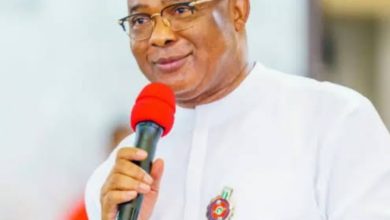
The Chief Executive of the Nigerian Upstream Petroleum Regulatory Commission (NUPRC), Oritsemeyiwa Eyesan, disclosed this on Tuesday at a two-day onboarding workshop for holders of Petroleum Prospecting Licences awarded during the 2022/2023 and 2024 licensing rounds in Lagos.
Eyesan said the commission had issued a directive to reclaim blocks from licence holders who had failed to commence activities within the stipulated periods, warning that operators would no longer be allowed to hold valuable petroleum assets indefinitely without developing them.
She said the directive applies to operators who have failed to meet the development timelines of three years for onshore assets and five years for offshore blocks.
“I’ve issued a circular, a directive, that by the 31st of this month, those who were awarded licences and have not done anything within the stipulated time (for those onshore, three years; and those offshore, five years), the commission will call in those blocks,” she said.
The NUPRC chief executive dismissed suggestions that the planned revocation was an empty threat, insisting that the government was determined to enforce the requirements.
“And somebody asked me: is it not just empty threats? Well, if you want to wait and see the blocking, I wish you good luck. It’s going to be drill or drop. This is standard practice all over the world. In the UK, in the Netherlands, all over the world, people do not just sit on assets,” Eyesan said.
She explained that the move was intended to address a recurring challenge in Nigeria’s upstream petroleum industry, where some investors obtain licences but fail to make meaningful progress towards exploration, development and production.
According to her, some successful bidders assemble technical teams to participate in licensing rounds but disband them after securing the assets, leaving them without the expertise required to move projects forward.
Such operators, she said, often spend considerable time searching for technical partners or financing before approaching the commission for extensions after failing to meet their obligations.
Eyesan warned that difficulties in securing funding or business partners would no longer be considered sufficient grounds for extending development deadlines, stressing that extensions would not be granted automatically.
“That is not going to suffice. It’s not enough ground for extension. An extension is not automatic,” she said.
She urged new licence holders to learn from the experiences of previous operators by ensuring they possess the technical expertise, financial resources and management structures required to develop their assets before committing to the business.
The commission’s chief executive stressed that acquiring an oil block involved more than meeting the financial requirements of a licensing round, noting that successful development depended on specialised knowledge, adequate planning and the capacity to execute projects.
Eyesan added that the commission had examined the performance of operators who acquired assets during previous licensing rounds, as well as the outcomes of oil field divestments by international oil companies.
She said the results had been mixed, with some operators successfully increasing production from previously undeveloped fields, while others recorded declining output from assets they had acquired.
The planned revocation signals a tougher regulatory approach by the NUPRC towards ensuring that petroleum licences translate into actual exploration and production activities, rather than remaining undeveloped assets.
For prospective and existing licence holders, the commission’s position is clear: failure to meet approved development timelines could result in the loss of their oil blocks, as the government seeks to encourage investment, improve field development and unlock Nigeria’s upstream production potential.