Africa’s richest man says he took the risk others avoided as Dangote Refinery IPO opens with N2.15 trillion target….
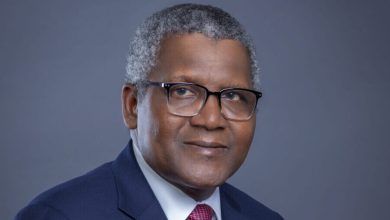
Aliko Dangote has pushed back against claims that his dominance of Nigeria’s refining industry amounts to a monopoly, arguing that the opportunity to invest in the sector was never reserved for his company.
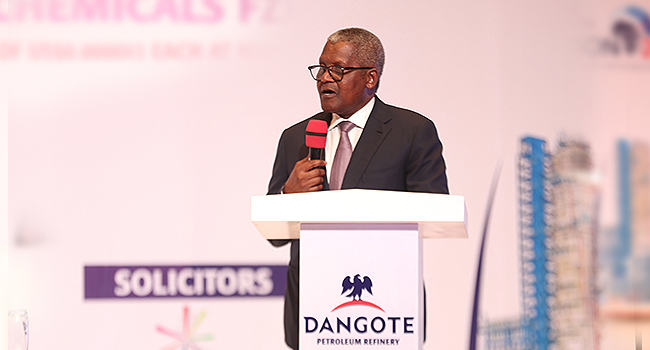
The chairman of Dangote Group made the clarification in an interview with newsmen, shortly after the Dangote Petroleum Refinery opened its much-anticipated initial public offering on September 14.
The offer involves 4.1 billion ordinary shares priced at N525 each, with the refinery seeking to raise about N2.15 trillion from investors.
The offer is expected to draw investors from across Nigeria and beyond, including civil servants, teachers, artisans, students, institutional investors, pension funds and Nigerians living abroad.
But while the public offer seeks to broaden ownership of the refinery, Dangote is also facing renewed scrutiny over the scale of his investment in Nigeria’s downstream oil industry.
He rejected the suggestion that government policies or regulatory decisions gave him an exclusive advantage, insisting that other investors had access to the same opportunity.
“There is nothing that government give us and say, this is only for Dangote,” he said.
According to Dangote, government establishes policies for sectors and makes those opportunities available to investors, leaving individual companies to determine whether they have the resources and appetite to participate.
“Government will create a policy around a sector. And that policy, they blow a whistle and say, yes, this is it.”
Dangote said his position in the refining business was largely the result of being willing to commit capital to a project on a scale that other investors were either unwilling or unable to pursue.
To illustrate his point, he turned to football and athletics.
“Have you ever seen a footballer looking at the audience? He has to continue looking at the ball. If I’m Messi, for example, I’m kicking the ball and I’m looking at the audience looking or hailing me, I will miss the ball.”
He added: “Those people, no matter what you do, you won’t make everybody happy. So if I’m going to make my continent great, and people want to call me monopoly for no reason, so be it.”
Dangote subsequently challenged critics to produce evidence that his companies had been granted exclusive privileges by the government.
“I challenge anybody to come and prove me wrong.”
‘I’m on the track’
The businessman said the difference between his investment strategy and that of some competitors was the scale at which he chose to operate.
“If they’re sitting on the bench, I’m on the track,” he said.
“There’s 100 meters race. Some people, they’re on the bench. I’m on the track. And I agreed to run that race.”
Dangote pointed to government approvals for multiple refinery projects as evidence that the sector was not closed to other investors.
“Government gave 34 licenses. Are we all going to wait till everybody’s ready? No.”
He acknowledged that investors had pursued different models depending on their available capital.
“Some of them are building modular refineries, 5,000 tonnes per day. But that’s what they can afford.”
The argument comes against the backdrop of government efforts to expand domestic refining and reduce Nigeria’s dependence on imported petroleum products.
More refinery projects in the pipeline
Following the enactment of the Petroleum Industry Act, the Federal Government disclosed that 23 refinery licences had been issued for the establishment of new facilities.
The projects are expected to add more than 850,000 barrels per stream day to Nigeria’s refining capacity when completed, potentially pushing total capacity above 1.125 million barrels per stream day.
Official figures have also pointed to a significant increase in domestic PMS supply, which rose from 1.3 billion litres in 2024 to 3.8 billion litres in 2025.
The developments form part of efforts to expand the number of operating refineries and strengthen domestic fuel supply.
For Dangote, however, the scale of his own project reflects a different level of financial commitment rather than preferential access.
The refinery has now entered another significant phase with the public offering, which gives a wider pool of investors an opportunity to acquire an interest in the business.
From refinery to global expansion
Dangote’s ambitions extend beyond the Nigerian refining market.
He has said his fertiliser business is on course to become the world’s largest and disclosed plans for an initial public offering in 2028.
The Dangote Petroleum Refinery and Petrochemicals FZE is also planning a listing on the New York Stock Exchange, while the company has outlined plans to increase its crude-processing capacity to 1.4 million barrels per day.
The expansion is targeted for completion in the first quarter of 2029.
For Dangote, these projects represent part of a broader industrial strategy focused on large-scale investments across Africa.
He has described such ventures as “big ticket items”, arguing that investments of this scale can help expand industrial capacity and accelerate economic development across the continent.