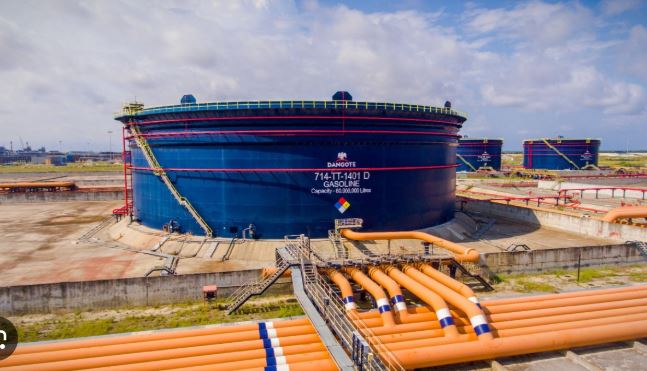
Dangote says strong European demand has exhausted August-September volumes as refinery expands global aviation fuel footprint….
The Dangote Petroleum Refinery has sold out its available jet fuel supplies to European markets for August and September, with the remaining volumes set aside for the Nigerian market, Chairman of Dangote Petroleum and Petrochemical Limited, Aliko Dangote, has disclosed.
Dangote made the disclosure on Monday, September 14, 2026, while speaking at the formal launch of the Dangote Refinery initial public offer on the trading floor of the Nigerian Exchange Group.
According to the billionaire businessman, the refinery is currently supplying aviation fuel to several African and international markets, but has had to reserve its remaining jet fuel volumes for domestic consumption following strong demand from Europe.
He described the development as evidence of the refinery’s growing importance in the international aviation fuel market.
“We are also serving other African markets and international markets. As you know today, the same refinery is the largest supplier of jet fuel to Europe. Europe must really thank Nigeria under the leadership of President Bola Ahmed Tinubu for keeping their planes flying,” Dangote said.
He further disclosed that demand for the refinery’s jet fuel had been so strong that available supplies from August through September had already been taken up.
“But the entire month of September, right from August, we sold out in terms of jet fuel. We have nothing to sell anymore; the only one that we have done is to reserve that of Nigeria,” he said.
The development places the Dangote refinery at the centre of an increasingly important shift in global aviation fuel supply, with its products reaching international markets at a time of heightened demand and supply disruptions.
Data from S&P Global shows that the refinery emerged as the world’s largest single exporter of aviation fuel in April, underscoring its rapid rise in the international refined petroleum products market.
The company is also preparing for another major expansion, with plans to invest an additional $10 billion to increase the refinery’s capacity to 1.4 million barrels per day.
The refinery reached full operational capacity in February 2026, allowing it to significantly increase production of refined petroleum products and take advantage of supply disruptions linked to the conflict in the Middle East.
David Bird, Chief Executive Officer of Dangote Refinery, said the facility moved quickly to respond to aviation fuel shortages following the disruption, increasing jet fuel production and helping to bridge supply gaps in international markets.
The refinery has maintained its strong position in Europe’s aviation fuel market in recent months.
In August, the company said it had overtaken the United States as Europe’s largest supplier of jet fuel for the second consecutive month.
In a statement at the time, the refinery said its performance demonstrated its growing influence in international energy markets and strengthened its position as a supplier of premium aviation fuel.
The refinery’s international aviation fuel ambitions, however, predate its recent surge in European exports.
In November 2024, Dangote Refinery began exporting its jet fuel to international destinations, including airports in Iceland, Tenerife and London.
A report by S&P Global Commodity Insights subsequently showed that Nigerian-produced aviation fuel had reached major international aviation hubs, including Heathrow Airport in the United Kingdom.
During the early phase of its export operations, much of the refinery’s supply between January and October 2024 was delivered through the Lome transshipment hub off the coast of Togo.
South Korea also emerged as the refinery’s largest single destination for naphtha exports, receiving about 23,000 barrels per day.
The latest disclosure from Dangote comes as the refinery continues to expand its reach beyond Nigeria, supplying refined petroleum products to African and international markets while retaining part of its output to meet domestic demand.
With European demand for its jet fuel remaining strong, the refinery’s growing export footprint is increasingly positioning Nigeria as a significant player in the global aviation fuel supply chain.