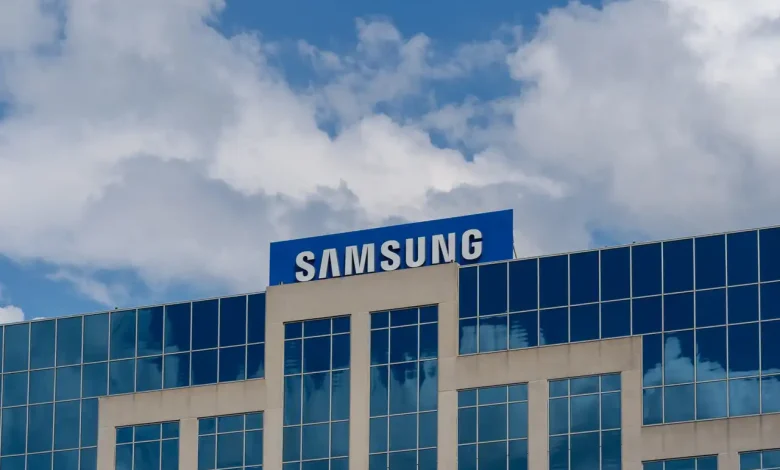
Samsung Electronics has secured a massive ₩22.8 trillion ($16.5 billion) contract to manufacture artificial intelligence semiconductors for Tesla, marking a major turning point for its underperforming chip foundry division and intensifying Tesla’s pursuit of full autonomous driving.
The deal, which runs through 2033, was announced Monday and includes plans to produce Tesla’s next-generation AI6 chips at Samsung’s new facility in Taylor, Texas currently under construction and scheduled for completion in 2026.
Confirming the agreement on social media, Tesla CEO Elon Musk called it “just the bare minimum,” implying the final value could exceed the reported figure. He also revealed plans to personally inspect the chip fabrication line to assist in optimizing production processes.
“These chips are the brain of our self-driving tech,” Musk wrote on X (formerly Twitter).
A Lifeline for Samsung’s Foundry Unit
For Samsung, the agreement marks its first major contract win since Executive Chairman Jay Y. Lee was cleared of legal charges earlier this year. It also comes at a time when its foundry business is grappling with under-utilization and mounting losses, having fallen further behind industry leader TSMC.
Samsung’s foundry market share dipped to 7.7% in Q1 2025, compared to TSMC’s dominant 67.6%, according to TrendForce. The company has been seeking high-profile clients to reinvigorate operations amid production delays at its Texas plant.
Following the announcement, Samsung’s stock surged nearly 7% in Seoul, reaching its highest point since last September. Chip suppliers such as Soulbrain Co. also rallied, jumping 16% on the news.
Tesla’s Chip Strategy Accelerates
The deal underscores Musk’s aggressive chip development timeline. Samsung currently produces Tesla’s AI4 chips, while TSMC has been contracted to fabricate the AI5 generation. The newly announced AI6 chips represent the next leap and will serve as the computational backbone of Tesla’s future Full Self-Driving (FSD) ambitions.
Despite growing skepticism around Tesla’s autonomy timeline, Musk said last week that mass deployment of self-driving vehicles could begin in the second half of 2026. Analysts, however, remain cautious, especially as the company continues to accelerate hardware upgrades, often leaving earlier vehicle buyers behind.
Musk’s shift from AI4 to AI6 in just a few years raises concerns about backward compatibility. Tesla stopped offering retrofits for older vehicles in 2023, citing high costs and technical constraints despite previously promising that FSD hardware installed in vehicles as far back as 2016 would be sufficient for autonomy.
Chip Wars and the 2nm Race
Both Samsung and TSMC are in a high-stakes race to commercialize 2-nanometer chip technology, which is expected to define the next frontier in AI, mobile, and automotive semiconductors. Winning Tesla’s AI6 contract gives Samsung not only a financial lift but also a crucial vote of confidence from one of the most watched names in tech and transportation.
As Tesla’s ambitions grow and Samsung’s foundry seeks a comeback, the partnership could reshape the global chipmaking landscape and determine how fast autonomous vehicles hit the roads.