Israel Strikes Houthi-Held Ports and Hijacked Cargo Ship in Yemen as Regional Tensions Deepen

In a significant escalation of regional hostilities, the Israeli military confirmed it carried out a wave of airstrikes late Sunday targeting Houthi-controlled infrastructure in Yemen, including key Red Sea ports and a hijacked cargo vessel, following a series of missile and drone attacks launched at Israeli territory.
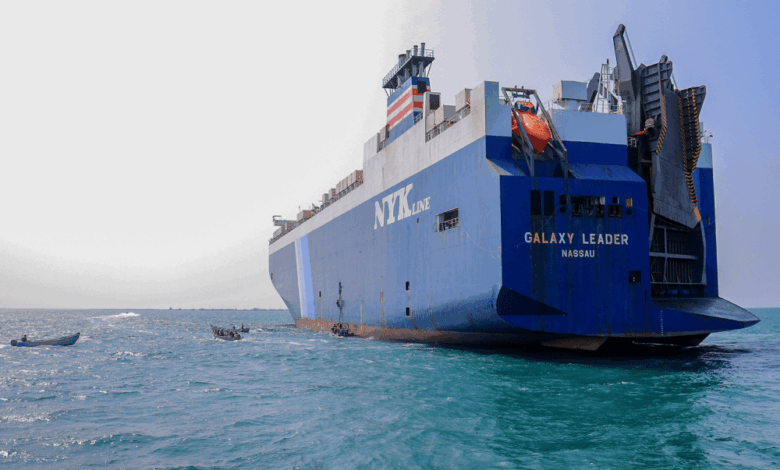
According to the Israel Defense Forces (IDF), the precision strikes hit strategic sites in the port cities of Hudaydah, Ras Issa, and al-Salif, as well as the Ras Kanatib power station and the Galaxy Leader — a commercial cargo ship seized by Houthi rebels in November 2023.
The IDF accused the Houthis of repurposing the Bahamas-flagged Galaxy Leader into a surveillance platform, allegedly used to monitor maritime traffic and coordinate attacks on international shipping lanes in the Red Sea.
“Approximately 20 fighter jets were involved in the operation,” an IDF spokesperson stated. “These strikes were a direct response to the continued UAV and missile assaults launched by the Houthi terrorist regime against Israeli civilians and infrastructure.”
Just hours after the strikes, the Israeli military reported that two missiles were fired from Yemen toward Israeli territory, triggering air raid sirens in southern Israel and the occupied West Bank. The IDF said it was still assessing whether interception systems successfully neutralized the threat.
The Houthis, an Iran-backed rebel group that controls large portions of northern Yemen, claimed their air defenses “confronted” the Israeli attack. Houthi-run Al-Masirah TV reported that the strikes damaged port infrastructure and the Ras Kanatib power plant but provided no details on casualties.
Israel, however, maintains that the targeted power station — a key supplier of electricity to the Yemeni cities of Ibb and Taizz — was being exploited to power Houthi military operations, turning civilian infrastructure into operational hubs.
The strikes represent one of Israel’s most far-reaching operations in Yemen in recent years and underscore a shift toward broader engagement with Iranian-aligned groups operating outside its immediate conflict zones.
The Red Sea, a critical corridor for global maritime trade, has increasingly become a theater of confrontation. The Houthis have launched dozens of attacks on commercial and naval vessels over the past year, particularly those linked to Israel or its Western allies, under the banner of solidarity with Palestinians in Gaza.
Since the war in Gaza reignited regional volatility, the Houthis have actively positioned themselves within the “Axis of Resistance” — a coalition of Iran-aligned groups that includes Hezbollah and Iraqi militias, all of whom have launched attacks on Israeli or U.S. interests in recent months.
This development marks a deepening of regional entanglements, with Israel now openly striking Houthi targets far beyond missile launch zones, signaling a new willingness to expand its operational reach across multiple fronts.
Despite the absence of confirmed casualties, international observers are sounding the alarm. The United Nations and the U.S. State Department have both called for restraint, expressing concern that Israel’s strikes and any retaliatory action from the Houthis, could destabilize global shipping routes and further undermine Yemen’s tenuous ceasefire.
Diplomatic analysts warn that the escalating tit-for-tat between Israel and the Houthis risks turning the Red Sea into a permanent conflict zone, where civilian trade, humanitarian aid, and fragile peace agreements could all fall victim to the widening shadow of the Gaza conflict.