Venezuela’s National Assembly Approves Amnesty for 379 Political Prisoners

Authorities in Venezuela have granted amnesty to 379 political prisoners following the adoption of a new amnesty law aimed at facilitating the release of detainees held in connection with political and security-related offences.
A lawmaker overseeing the implementation of the measure, Jorge Arreaza, said in a televised interview that the prisoners were expected to be released “between tonight and tomorrow morning.” He added that requests for amnesty had already been submitted by the Public Prosecutor’s Office to the relevant courts for judicial approval.
The National Assembly had unanimously approved the amnesty legislation a day earlier, raising hopes among families of detainees who have been awaiting possible releases.
However, the new law has faced criticism from opposition figures and rights groups, as it appears to exclude certain categories of offences. The legislation does not apply to individuals prosecuted for acts considered to involve “promoting or facilitating armed or forceful actions” against Venezuela’s sovereignty through foreign involvement.
The administration of interim leader Delcy Rodríguez has previously accused opposition leader María Corina Machado, who is currently based in the United States, of involvement in such activities.
The law also excludes members of the security forces convicted of terrorism-related offences.
Family members of detainees have continued to gather outside prisons across the country in anticipation of possible releases. At the Rodeo 1 prison near Caracas, many of those awaiting freedom are former soldiers or security personnel.
One relative, Hiowanka Avila, whose 30-year-old brother was arrested in 2018 over allegations linked to an attempted assassination plot using armed drones, said the amnesty provisions do not appear to cover her family member.
Arreaza explained that military-related cases would be handled within the military justice system, which would determine whether benefits could be granted where appropriate.
The NGO Foro Penal had previously estimated that about 650 people were in detention, though it noted that the figure had not been recently updated.
The organisation’s director, Alfredo Romero, said amnesty would not be automatic, stressing that each case would still undergo judicial review.
The government defended the legislation, with Rodríguez stating on state television that the initiative was part of efforts to build a “more democratic, just and freer” society.
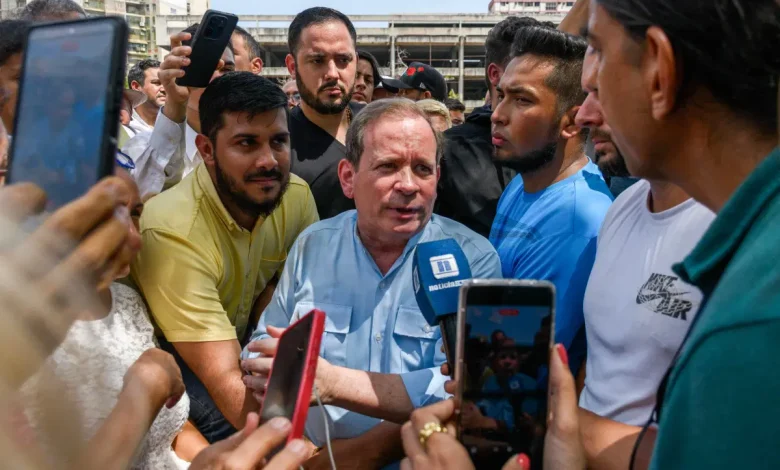
Opposition politician Juan Pablo Guanipa announced his release from detention after the bill was passed. Although he had been briefly released earlier this month, he was later re-arrested and placed under house arrest.
“I am now completely free,” Guanipa wrote on social media, calling for the release of other political prisoners and for exiles to be allowed to return home.
Exiled opposition figure Edmundo González Urrutia said lasting national reconciliation would require accountability and historical memory, arguing that genuine amnesty should support a transition to the rule of law.
Hundreds of Venezuelans have been imprisoned in recent years over alleged plots to overthrow the government of former president Nicolás Maduro, who has faced international accusations of authoritarianism and electoral fraud following the disputed 2024 election in which he was declared winner.
The amnesty law has also drawn criticism from human rights advocates who fear it could be used to shield past abuses under the administrations of Maduro and his predecessor, Hugo Chávez.
The development comes amid continued geopolitical and economic tensions involving Venezuela and the influence of external actors, including the administration of Donald Trump, whose government had earlier taken a strong stance on Venezuelan oil exports and sanctions policy.