Vatican Announces First Chinese Bishop Under Pope Leo XIV

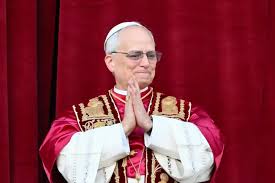
The Vatican has confirmed the appointment of the first Chinese bishop under the newly elected Pope Leo XIV, a move seen as reaffirming the Holy See’s commitment to a delicate and controversial agreement with Beijing over the nomination of bishops.
In a statement released this week, the Vatican expressed “satisfaction” with China’s recognition of the appointment of Joseph Lin Yuntuan as auxiliary bishop of the Diocese of Fuzhou, located in Fujian Province. Pope Leo XIV formally made the nomination on June 5, less than a month after his election.
“This event represents further fruit of the dialogue between the Holy See and the Chinese authorities and is an important step in the communal journey of the diocese,” the Vatican said.
The appointment is the first under Pope Leo, who succeeded Pope Francis following the latter’s death on April 21 after a 12-year papacy. Leo XIV was elected on May 8 in a conclave of cardinals. The development is widely viewed as an early indication that the new pontiff intends to continue the diplomatic engagement initiated by Francis with the Chinese Communist Party.
While the Vatican and China do not have formal diplomatic ties—owing largely to the Holy See’s recognition of Taiwan—the two sides have maintained a sensitive working relationship, especially since the signing of a landmark deal in 2018. The agreement grants both Rome and Beijing a say in the appointment of bishops in China’s state-controlled Church, which serves around 12 million Catholics.
The terms of the deal, which has never been made public, have faced sustained criticism from some within the Catholic Church, who argue it cedes too much control to the Chinese state. Detractors fear the arrangement risks undermining religious freedom by allowing the Communist Party excessive influence over Church leadership.
Despite the criticism, Pope Francis stood by the accord, which has since been renewed multiple times, most recently in October 2024 for another four-year term.
The period following Francis’s death saw China move to assert itself by proceeding with the state-backed “election” of bishops in the dioceses of Shanghai and Xinxiang—actions widely seen by Vatican watchers as an effort by Beijing to test the boundaries of the agreement during the leadership transition.
Joseph Lin’s appointment and China’s formal recognition of it now appear to mark a cautious return to the terms of cooperation envisioned by the original 2018 deal. It remains to be seen how Pope Leo XIV will navigate the evolving relationship, but this early decision suggests he will continue his predecessor’s attempt to carve out a space for the Catholic Church in China’s tightly controlled religious landscape.