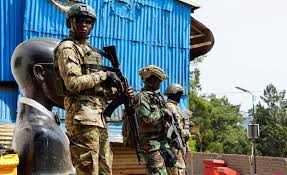
The United States is leading a diplomatic push for a peace agreement between Rwanda and the Democratic Republic of Congo (DRC), with a key condition being the withdrawal of Rwandan troops from eastern Congo, Reuters reports, citing diplomatic sources.
The demand is expected to face stiff opposition from Kigali, which considers the presence of armed militias in eastern DRC a direct and ongoing threat to its national security.
U.S. President Donald Trump is reportedly prioritizing a resolution to the long-standing conflict as part of a broader plan to unlock billions of dollars in Western investment into Congo’s mineral-rich eastern region — home to key global resources like cobalt, tantalum, copper, lithium, and gold. These minerals are vital to global technology and energy supply chains.
Trump’s senior adviser for Africa, Massad Boulos, told Reuters in May that the U.S. hopes to finalize a peace accord “within about two months,” a timeline considered ambitious given the complexity and volatility of the conflict.
“You’ve heard about a minerals agreement. We’ve reviewed Congo’s proposal. I’m happy to announce that the president and I have agreed on a path forward for its development,” Boulos said following a meeting in Kinshasa with Congolese President Félix Tshisekedi.
According to a draft of the peace agreement reviewed by Reuters, Rwanda would be required to remove all troops, military equipment, and weaponry from Congolese territory before the deal could be signed. Four diplomatic sources confirmed the draft’s authenticity, stating that it was authored by U.S. officials.
The document goes further than the declaration of principles signed in April in Washington, where the foreign ministers of both countries met with U.S. Secretary of State Marco Rubio. That earlier agreement committed both sides to addressing mutual security concerns while upholding each other’s sovereignty and territorial integrity.
If accepted, the deal could mark a significant turning point in efforts to stabilize one of Africa’s most volatile regions and pave the way for major economic investment tied to the global clean energy transition.