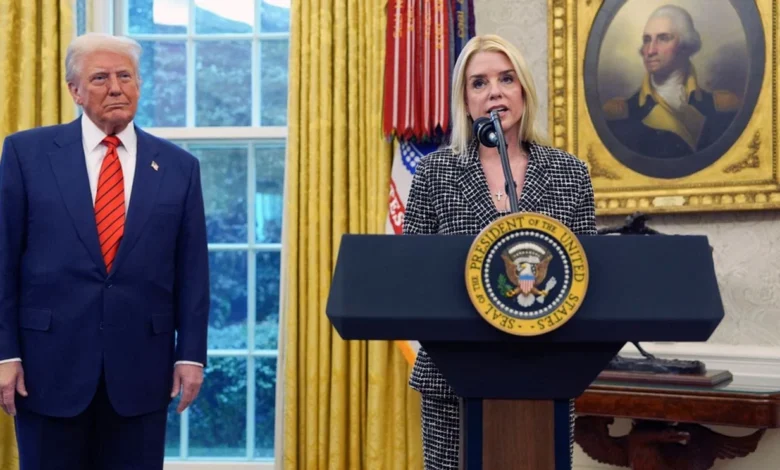
In a dramatic development, U.S. Attorney General Pam Bondi has authorized prosecutors to convene a grand jury to investigate whether political opponents of former President Donald Trump conspired to fabricate allegations of Russian collusion during the 2016 presidential campaign.
According to CBS News, the grand jury will review evidence to determine if formal charges should be filed. However, it remains unclear who might be indicted or what specific charges may arise from the proceedings.
The Trump-Russia saga, which overshadowed much of Trump’s presidency, stemmed from claims that his campaign had improper ties to the Kremlin.
Trump has long maintained he was the target of a politically motivated smear campaign by his rivals.
Fueling the renewed scrutiny, Director of National Intelligence Tulsi Gabbard recently accused former President Barack Obama and his national security apparatus of orchestrating a “years-long coup” against Trump.
Gabbard claimed intelligence reports of Russian election interference were weaponized by the Obama White House to falsely connect Trump to Moscow.
Trump responded with a stunning accusation, calling Obama’s alleged actions “treason”—a claim dismissed as “bizarre” by a spokesperson for the former president.
Meanwhile, Democrats argue that Gabbard’s claims do not discredit the January 2017 U.S. intelligence consensus that Russia sought to damage Hillary Clinton and aid Trump’s campaign.
A 2020 bipartisan Senate Intelligence Committee report reinforced that conclusion, finding substantial evidence of Russian efforts to help Trump win the 2016 election.
Adding to the intrigue, Fox News reported that former CIA Director John Brennan and ex-FBI Director James Comey are under criminal investigation in connection with the origins of the Trump–Russia probe. Both have denied wrongdoing and accused Trump of politicizing the justice system.
The Mueller investigation, which loomed large over Trump’s first term, ultimately found insufficient evidence to charge Trump or his campaign with conspiring with Russia—though it did not fully exonerate him either.
The controversy reignited last week following the declassification of a 29-page appendix from Special Counsel John Durham’s investigation into the origins of the Russiagate probe.
The document references a 2016 U.S. intelligence memo claiming that then-presidential candidate Hillary Clinton had approved a plan to portray Trump as a Russian asset in order to distract from her own email controversy.
The Durham appendix also includes what are described as hacked emails from a non-profit affiliated with liberal donor George Soros. One purported email, allegedly from Leonard Benardo, a senior executive at Soros’ Open Society Foundations, references a Clinton foreign policy adviser, Julianna Smith. Dated July 26, 2016, the email reads: “Julie says it will be a long-term affair to demonize Putin and Trump. Now it is good for a post-convention bounce. Later the FBI will put more oil into the fire.”
While there’s nothing illegal about political smear tactics, Trump allies argue that if genuine, the email suggests that federal investigators may have been entangled in a broader political scheme. However, Durham found no concrete evidence of such an FBI conspiracy.
Benardo told Durham he did not recall authoring the email, though he conceded some phrasing resembled his style. Smith also denied remembering the message. Durham did not conclude whether the emails were authentic or altered by Russian operatives.
Durham’s full 306-page report, released in 2023, sharply criticized the FBI’s initial investigation into Trump’s campaign, stating it lacked “analytical rigor” and relied too heavily on “raw, unanalysed, and uncorroborated intelligence.”
U.S. intelligence agencies have confirmed that Russia interfered in the 2016 election through social media disinformation campaigns and hacking Democratic Party emails.
However, officials ultimately determined that the meddling did not decisively affect the election outcome.
With the grand jury process now underway, the political and legal reverberations of the Trump-Russia narrative are far from over.