Tinubu’s Reforms Boost Revenue to ₦6.9tn, Dismantle Dollar Black Market – Finance Minister
Wale Edun highlights surge in revenue, forex stability, and investor confidence as key wins of ongoing economic reforms

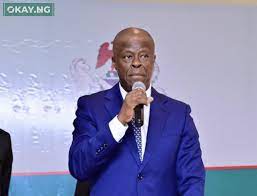
Nigeria’s Minister of Finance and Coordinating Minister of the Economy, Wale Edun, says the sweeping economic reforms introduced under President Bola Tinubu’s administration have driven government revenue to ₦6.9 trillion between January and April 2025, a 40% increase compared to the ₦5.2 trillion generated during the same period in 2024.
Edun made the disclosure during the second-quarter Citizens and Stakeholders’ Engagement Session on Monday in Abuja, where he highlighted the administration’s progress on fiscal performance and reform implementation.
“By the end of April, about ₦6.9 trillion was generated, and that figure continues to rise,” Edun said, citing improved revenue collection efforts, technology-driven leak prevention, and strict fiscal oversight.
Dismantling the Black Market
One of the most significant outcomes of the Tinubu-led reforms, according to the minister, is the effective elimination of the dollar black market premium, a long-standing source of arbitrage and economic distortion.
Before the reforms, businesses and individuals could access forex at official rates and resell in the black market for massive profits. That loophole, Edun said, has now been largely closed through foreign exchange liberalisation and market-based pricing policies by the Central Bank of Nigeria.
“Now, market forces determine the value of the naira,” he said. “The pricing distortions that discouraged productivity and incentivised rent-seeking have been addressed.”
He acknowledged that slight differences between official and parallel rates remain due to documentation requirements and convenience, but emphasized that the “huge profit margins that once undermined investment confidence are gone.”
Foreign Investment, Credit Ratings Improve
The finance minister pointed to growing investor confidence, citing Shell’s $5.5 billion oil investment commitment as proof that major multinational companies still view Nigeria as a viable investment destination.
He also revealed a dramatic surge in Nigeria’s external reserves from $3 billion to over $23 billion in under two years, crediting improved forex management and rising non-oil revenues.
Edun noted that international rating agencies such as Fitch and Moody’s have responded by upgrading Nigeria’s credit ratings — a move that he said will lower borrowing costs and strengthen inflation control.
Fiscal Discipline and Debt Sustainability
On the fiscal side, Edun reported that annual revenue rose from ₦12.5 trillion in 2023 to over ₦20 trillion in 2024, with the upward trend continuing into 2025.
He also revealed that Nigeria’s debt service-to-revenue ratio fell from 150% in Q1 2023 to around 60% by end of 2024, citing reduced dependence on Ways and Means financing from the Central Bank and a renewed focus on borrowing within regulated limits.
“We’ve restored fiscal credibility, and investors are beginning to trust our financial system again,” Edun said.
Structural Gains and Inclusive Growth
While acknowledging persistent challenges in oil revenue due to low production and global price instability, Edun said that long-term reforms — such as the ramp-up of domestic refining capacity to 1.2 million barrels per day — will help Nigeria reduce dependence on crude exports.
He credited this progress to investments by Dangote Refinery and modular refining facilities, which he said will boost value-added production, forex earnings, and employment.
Beyond macroeconomic gains, the minister said the administration is targeting inclusive growth through grants and loans for small businesses, affordable mortgage schemes with below 10% interest, and improvements in primary healthcare for 37 million Nigerians.
Power Sector and Asset Optimization
Edun also highlighted a 40% increase in electricity output, driven by reforms including the Band A tariff structure and an aggressive metering programme. He underscored Nigeria’s participation in the World Bank and AfDB’s Mission 300, aimed at providing power to 300 million Africans by 2030.
On public asset management, Tajudeen Ahmed, Executive Director at the Ministry of Finance Incorporated (MoFI), disclosed that Nigeria has identified ₦38 trillion worth of publicly owned assets so far, with a goal of scaling to ₦70 trillion by 2026 and ₦100 trillion within a decade.
“We’re unlocking dormant value and setting the stage for sustainable investment,” Ahmed said.
The Road Ahead
Edun described the economic reforms as unfolding in three phases:
- Removal of pricing distortions (in forex and fuel markets),
- Macroeconomic stabilisation, and
- A pivot to inclusive, sustained growth.
While critics have pointed to lingering inflation and hardship, the minister insisted that the worst is behind Nigeria, and the ongoing reforms will ultimately lead to a more resilient and equitable economy.