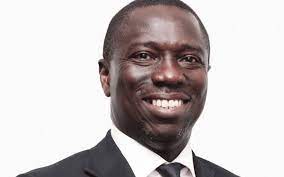
The Minister of Power, Adebayo Adelabu, has called on the National Assembly to provide direct funding for the Transmission Company of Nigeria (TCN), warning that without urgent financial support, the country’s transmission infrastructure risks stagnation despite recent generation gains.
Speaking at a two-day retreat organized by the Senate Committee on Power over the weekend, Adelabu revealed that TCN is financially overstretched, surviving solely on Internally Generated Revenue (IGR), which has been in steady decline. He warned that the agency’s current monthly income is insufficient to cover salaries, let alone maintain or expand critical infrastructure.
“TCN is grossly underfunded. What it generates monthly can’t even pay staff, not to mention the investment needed to modernize our ageing transmission network. We must find a way to include TCN in the national appropriation bill,” he said.
Distribution Woes Undermining Sector Reforms
Adelabu identified chronic underinvestment in the distribution segment as the biggest threat to Nigeria’s power sector progress. He criticized the Distribution Companies (DisCos) for consistently underperforming and frustrating gains made in power generation.
“No matter how much we invest in generation, it means nothing to consumers if the power cannot be delivered due to weak distribution infrastructure. The DisCos have failed to meet expectations,” he noted.
The Minister also exposed the superficial nature of partnerships during the 2003 privatization exercise, saying many DisCos claimed to have technical foreign partners, who exited just months after takeover. He lamented that instead of investing in infrastructure, most DisCos diverted revenues toward loan repayments used to acquire the assets in the first place.
Revenue Shortfalls, Disparities Across Regions
Despite tariff adjustments that improved market liquidity raising revenue from ₦1 trillion in 2023 to ₦1.7 trillion in 2024 distribution remains the sector’s weakest link.
In Q4 2024, DisCos in the North remitted just ₦124.4 billion (30%) of their ₦408.86 billion invoice. The Abuja DisCo alone accounted for 85% of the North’s remittance. Meanwhile, Southern DisCos performed better, paying ₦254.6 billion (67%), but 70% of that came from Lagos-based operators.
“Outside Lagos and Abuja, infrastructure is crumbling. Without real investment, the gap between regions will continue to widen,” Adelabu warned.
Metering Push and Mounting Subsidies
The Minister also addressed the metering gap, calling it a major driver of revenue loss and consumer distrust. He said the government has launched a ₦700 billion Presidential Metering Initiative (PMI) and a World Bank-supported programme aiming to deploy 4.3 million meters by 2025. In April 2024, 75,000 meters were installed, with 200,000 more expected in May.
Still, he admitted progress is slow due to systemic neglect and operational bottlenecks.
The sector is also burdened by a ₦4 trillion subsidy backlog, including ₦1.94 trillion for 2024 alone. With monthly shortfalls reaching ₦200 billion, Adelabu stressed that the current tariff regime is unsustainable and drains funds needed for infrastructure investment.
Call for DisCo Restructuring and Private Capital
To rescue the sector, the Minister announced plans to restructure underperforming DisCos and strengthen enforcement of performance standards. He also revealed efforts to attract private capital into grid infrastructure and regionalise transmission networks to reduce systemic risk.
Highlighting generation gains, Adelabu cited a record 6,003MW output in March 2025 and noted that 61 new transformers were deployed in 2024, with 13 more added in early 2025.
“These improvements will mean nothing without stronger distribution systems to deliver power to homes and businesses,” he said.
Regional Projects and Infrastructure Protection
On regional developments, the Minister revealed plans to:
- Revive the 215MW Kaduna Thermal Plant, now 87% complete.
- Develop the 1,000MW Makurdi Hydropower Project.
- Concession the abandoned 10MW Katsina Wind Farm through a proposed state-private partnership.
To safeguard infrastructure, Adelabu called on lawmakers to enact stricter penalties for vandalism, power theft, and illegal connections.
“Vandalism must not be treated as a civil matter. It’s a criminal act against national infrastructure,” he said, urging Nigerians to protect public energy assets and support reforms.
Despite all the challenges, Adelabu confirmed that the national grid has remained stable throughout 2025, a result of deliberate investment and operational reforms.
“We’ve had zero grid collapses this year. That’s not by luck it’s the outcome of hard work, massive investment, and a commitment to stability.”