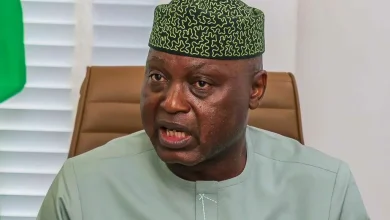
The Group Managing Director of Nigerian National Petroleum Company (NNPC) Limited, Bayo Ojulari, has revealed that Nigeria’s crude oil pipeline and terminal receipts are approaching full capacity due to strengthened security measures.
Speaking at the 2025 African Chief of Defence Staff Summit on Monday, Ojulari highlighted a remarkable turnaround from terminal receipts as low as 30 percent—attributable to widespread crude theft—to nearly 100 percent currently.
He attributed this progress to concerted collaboration between government bodies and intelligence agencies, stating, “We have seen the benefits of the collaboration within the security space, with significant improvement in our operating environment. The devastating impact of crude theft and pipeline attacks is now becoming an issue of the past, and this has come from the immense and intentional efforts of our government agencies and intelligence agencies across the nation and within the Niger Delta.”
Ojulari further emphasized the vital role played by the discipline, professionalism, and teamwork of Nigeria’s defense and security institutions in achieving this milestone. “Today I can proudly report to you that our pipeline and terminal receipts of crude oil, which were as low as 30 per cent, are attaining close to 100 per cent due to the support of security forces and intelligence agencies,” he stated.
The country’s 2025 national budget was premised on crude oil production of 2.06 million barrels per day at $75 per barrel, but persistent insecurity and theft in the Niger Delta have hampered this target. Ojulari identified both local and international cartels exploiting security gaps to perpetrate crude theft, stressing that these illegal activities extend beyond local boundaries to sophisticated global syndicates.
“We also know that crime, theft and its attendant illegal activities are by no means a purely localised occurrence. Rather, these operations involve sophisticated international syndicates that take advantage of gaps within the state’s national, regional and continental architecture,” he explained.
He urged African governments to tackle the problem holistically through strengthened regional cooperation and strategic collaboration. “It is therefore imperative that forums such as these are encouraged with a view to strengthening strategic, tactical and operational activities within the continent. Africa must take its destiny into its hands and chart a collective way forward that meets the goals and aspirations of our people as stakeholders within the energy industry and in light of geopolitical tension around the world.”
Ojulari also reiterated NNPC’s commitment to ongoing cooperation with military and intelligence agencies, emphasizing that such partnerships have contributed significantly to reducing sabotage, vandalism, crude theft, illegal refineries, and bunkering across Nigeria’s oil sector. He called for expanding these collaborative frameworks regionally and continentally, supported by appropriate tools, policies, and technology to enable seamless cross-border synergy.
“As this summit deliberates on deepened defence, strategic, and collaboration in Africa, let me assure you that the oil and gas sector in Nigeria stands ready to complement this effort as we eagerly articulate the benefits to be accrued for the ultimate upliftment of all the stakeholders and citizenry across our borders,” Ojulari concluded.
His remarks coincide with recent statistics from the Nigerian Upstream Petroleum Regulatory Commission (NUPRC), which reported a notable increase in Nigeria’s crude oil production in July 2025, averaging 1.71 million barrels per day.