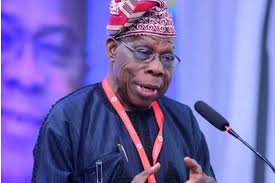
Former President Olusegun Obasanjo has revealed that Nigeria’s labour unions were once a battleground for Cold War intelligence, with rival unions secretly backed by the KGB and CIA, before reforms secured their independence.
Obasanjo made the disclosure on Wednesday in Abuja, while delivering a keynote tribute at the 85th birthday and book launch of former President of the Nigeria Labour Congress (NLC), Hassan Sunmonu, titled ‘Memoirs of an African Trade Union Icon: Organise, Don’t Agonise’.
According to the former president, the foreign influence posed a serious threat to national sovereignty, prompting him, as military head of state, to restructure the labour movement into a single, independent organisation fully owned and funded by Nigerians.
“At the time, there were two major labour organisations, neither organised or funded by Nigeria. One was backed by the KGB, the other by the CIA. I wanted a union controlled, financed, and led by Nigerians”, Obasanjo said.
He explained that reforms led by Justice Adebiyi resulted in the creation of the Nigerian Labour Congress, with leadership elected independently by members. Hassan Sunmonu became the first elected president, marking a turning point in Nigeria’s industrial relations history.
Obasanjo praised Sunmonu’s leadership, noting that while unions needed to cooperate with government, they also had to challenge authority openly to maintain credibility with workers. He recalled advising Sunmonu to voice criticisms publicly after private consultations, a strategy that strengthened trust and preserved industrial stability.
“There was relative peace. He managed the union, I managed government, and the labour movement grew stronger”, he said.
The former president also highlighted the introduction of a compulsory funding system, which ensured stable union finances while cutting off foreign influence, effectively ending KGB and CIA involvement in Nigeria’s labour affairs.
Beyond Nigeria, Obasanjo credited Sunmonu with elevating Nigerian labour to the continental and global stage, particularly through his work in Ghana, positioning Nigeria as a model for labour leadership across Africa.
He noted that Sunmonu’s memoir captures a pivotal era in Nigeria’s political and labour history, and said writing the foreword was a personal recognition of Sunmonu’s lasting impact on trade unionism.
Obasanjo described Sunmonu as second only to labour icon, Michael Imoudu, praising him for consolidating, expanding, and internationalising Nigeria’s organised labour.