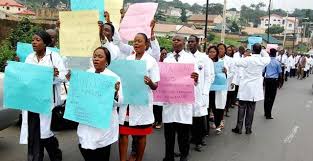
The Federal Ministry of Health and Social Welfare has said the ongoing strike by the National Association of Resident Doctors (NARD) is driven by structural and policy challenges in the health sector, not neglect by the current administration.
The Minister of State for Health, Iziaq Salako, said that the Ministry has shown commitment to improving workers’ welfare, citing the ₦90 billion annual upward review of professional allowances approved in November 2025. The revised allowances cover call duty, shift duty, non-clinical duty, and rural posting, and were negotiated collectively with health professional groups.
Salako said past negotiations were fragmented, leading to conflicting agreements and repeated strikes, adding that the current approach emphasises collective bargaining to reduce disputes.
While reaffirming commitment to better pay, he noted that reviews must be balanced with other national priorities such as education, security, and infrastructure.
On NARD’s demands, Salako said the list has been reduced from 19 to nine items, though some requests are limited by public service rules. He clarified that specialist allowances remain reserved for consultants, warning that extending them to residents could trigger wider claims.
He also explained that the National Postgraduate Medical College does not issue certificates after Part I exams and the Ministry cannot alter that policy.
Addressing the disengagement of five resident doctors in Lokoja, Salako said a review panel recommended reinstatement for two doctors, reprimand for two, and a fresh hearing for one.
He assured Nigerians that the Ministry, alongside the Labour Ministry, remains committed to dialogue to stabilise the health sector and prevent service disruptions.