The Nigerian Government has confirmed that the recently cleared ambassadorial nominees will not take up their posts until 2026.
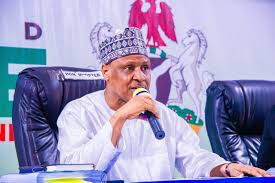
Minister of Information and National Orientation, Mohammed Idris, made the disclosure during a press briefing in Abuja, noting that the Senate last week confirmed 67 ambassadorial nominees appointed by President Bola Tinubu.
According to Idris, the confirmed nominees will first undergo a comprehensive orientation programme before being deployed to their respective countries of assignment. “In 2026, our newly appointed ambassadors will assume their roles abroad, strengthening Nigeria’s bilateral relations and advancing our visibility and strategic interests globally”, he said.
Highlighting Nigeria’s diplomatic achievements in 2025, the minister said the country successfully resolved its recent diplomatic issues with the United States, maintaining strong bilateral relations. He noted that Nigeria and the U.S. recently signed a five-year bilateral health cooperation agreement valued at $5.1 billion, with the U.S. contributing $2.1 billion in grants and Nigeria committing $3 billion.
“This marks the largest co-investment under the America First Global Health Strategy and will bolster Nigeria’s healthcare system while attracting international investment”, Idris added.
The minister also highlighted Nigeria’s growing influence on the global stage. In 2025, the country regained its Category C seat on the International Maritime Organisation (IMO) Council after 14 years and saw Nigerians assume key international positions, including Chairperson of the World Customs Organisation Council, Executive Director of WHO’s Health Emergencies Programme, Vice Chair of the ITU Council and Vice President of the International Association of Ports and Harbours in Tokyo.
Idris further announced that Nigeria will host major international events, including the Creative Africa Nexus (CANEX) 2026 and the Intra-African Trade Fair (IATF) 2027, reflecting the country’s rising prominence in continental trade, culture and diplomacy.
He concluded by emphasising that the 2026 ambassadorial deployments are part of broader efforts to consolidate Nigeria’s strategic partnerships and assert its position as a confident, proactive player on the global stage.