
A £746 million infrastructure boost and sweeping visa reforms signal a new era for trade, but with sharper scrutiny on cross-border movement and finance…..
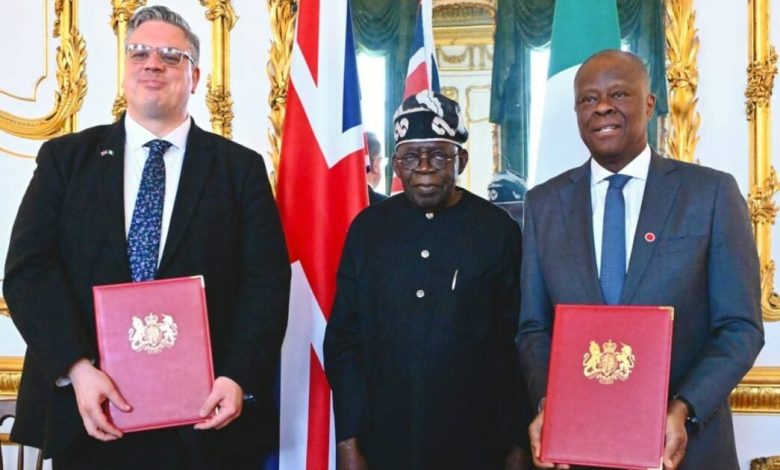
Nigeria and the United Kingdom have entered a new phase of economic cooperation, finalising a set of far-reaching agreements designed to dismantle long-standing trade barriers while tightening migration oversight. The deal was concluded during President Bola Tinubu’s recent visit to London, marking one of the most ambitious bilateral engagements between both countries in recent years.
At the heart of the agreement is a £746 million infrastructure financing package aimed at overhauling Nigeria’s busiest maritime corridors. The Lagos Port Complex in Apapa and the Tin Can Island Port both critical to the country’s import and export ecosystem are set for a major technological upgrade. For decades, inefficiencies and congestion at these ports have driven up costs, delayed shipments, and strained businesses nationwide.
This new investment seeks to replace outdated manual systems with a fully digitised, automated framework. Backed by UK Export Finance and coordinated through Citibank, the project will also include rail and terminal enhancements to improve cargo evacuation. A significant portion of the upgrade involves the supply of specialised steel for construction and rehabilitation works, underscoring the scale of the transformation planned.
If executed effectively, the reforms could dramatically reduce vessel waiting times from weeks to just days, easing supply chain bottlenecks and potentially lowering the cost of goods across the country. For exporters, faster processing could open the door to more competitive access to international markets, positioning Nigeria as a stronger player in Atlantic trade routes.
Beyond infrastructure, the agreement introduces a revamped business mobility framework aimed at easing travel restrictions for investors and skilled professionals. Central to this is a new “Trusted Partner” visa arrangement, which allows pre-approved UK-based companies with significant operations in Nigeria to move key personnel more efficiently.
Under the scheme, executives, engineers, and technical specialists will benefit from expedited visa processing, eliminating many of the bureaucratic delays that have historically slowed project execution. The transition to a fully digital visa system already in place since February 2026 means physical visa stickers are no longer required, streamlining documentation and reducing administrative friction.
While the deal prioritises economic growth, it also comes with stricter migration controls. A new three-year strategic plan introduces measures to manage irregular migration more effectively, including the recognition of “UK Letters” as valid travel documentation for repatriation in cases where individuals lack passports. This represents a notable administrative shift for Nigeria’s immigration system.
In parallel, both countries are stepping up efforts to combat financial crime linked to migration networks. A joint intelligence model will enable closer collaboration between Nigerian and British financial institutions, allowing authorities to track suspicious transactions and disrupt organised fraud operations more efficiently.
Taken together, the agreements reflect a dual strategy: making it easier for legitimate business and investment to thrive, while closing gaps that enable abuse of migration and financial systems. For everyday Nigerians, the long-term effects could include more stable prices, improved trade efficiency, and increased economic activity though accompanied by heightened financial oversight.
As implementation begins, attention will shift to execution. The success of the deal will ultimately depend on whether these ambitious plans translate into tangible improvements on the ground, particularly in Nigeria’s notoriously complex port environment.


