Currency weakens slightly as investors weigh 50bps easing, despite reserves hitting 13-year high…..
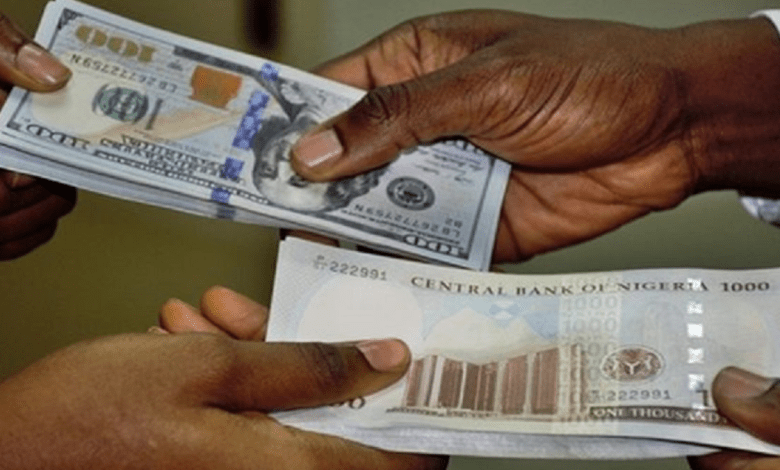
The naira weakened to ₦1,359 per dollar on Tuesday, slipping from ₦1,353.5/$ recorded a day earlier, following the conclusion of the 304th Monetary Policy Committee (MPC) meeting of the Central Bank of Nigeria (CBN).
The mild depreciation reflects cautious sentiment in the official foreign exchange market as investors digest the apex bank’s latest policy decision.
Market Reaction to Rate Cut
At the meeting, the MPC voted to reduce the Monetary Policy Rate (MPR) by 50 basis points, bringing it down from 27 per cent to 26.5 per cent, a measured pivot toward easing after an extended tightening cycle.
Despite the rate cut, other key monetary parameters were left unchanged:
- Cash Reserve Ratio (CRR):
- 0% for commercial banks
- 0% for merchant banks
- Liquidity Ratio: 30.0%
- Standing Facilities Corridor: +50/-450 basis points around the MPR
The combination of a rate cut with tight liquidity controls signals that policymakers are attempting to balance growth support with currency stability.
Inflation Down, But FX Under Pressure
The MPC’s decision comes against the backdrop of moderating inflation. Headline inflation declined for the eleventh consecutive month to 15.1 per cent in January 2026 — a significant drop compared to levels seen last year.
However, the naira’s slight pullback suggests that foreign exchange traders remain cautious about the implications of monetary easing, particularly in a market where liquidity dynamics and capital flows play a crucial role.
Reserves at 13-Year High
Speaking after the meeting, CBN Governor Olayemi Cardoso disclosed that Nigeria’s gross external reserves rose to $50.45 billion as of February 16, 2026 — the highest level recorded in 13 years.
Cardoso described the external sector’s performance as “remarkable,” noting that improved trade balances and stronger inflows have contributed to enhanced FX market stability.
He emphasised that investor confidence remains central to the sustainability of the foreign exchange framework.
“Without market confidence, no matter what you do, you will significantly sub-optimise,” he said.
A Pattern of Mixed Reactions
The naira’s response to the 304th MPC decision contrasts with movements seen after previous meetings, underscoring how FX performance is influenced by a mix of policy signals, liquidity conditions, and investor expectations.
- After the 303rd MPC meeting, the naira appreciated to ₦1,441/$.
- Ahead of that November meeting, it strengthened from ₦1,458/$ to ₦1,452/$.
- Following the 302nd MPC meeting, however, the currency weakened to ₦1,493.2/$ from ₦1,491.49/$.
These varying outcomes highlight the complex interplay between interest rate decisions and broader market forces.
Balancing Stability and Growth
While the rate cut marks a cautious step toward supporting economic expansion, the retention of other policy levers suggests the CBN is unwilling to loosen financial conditions too aggressively.
For now, the naira’s modest dip signals that markets are still adjusting to the new policy stance. Sustained currency strength will likely depend on continued FX inflows, stable reserves, and consistent policy execution in the months ahead.