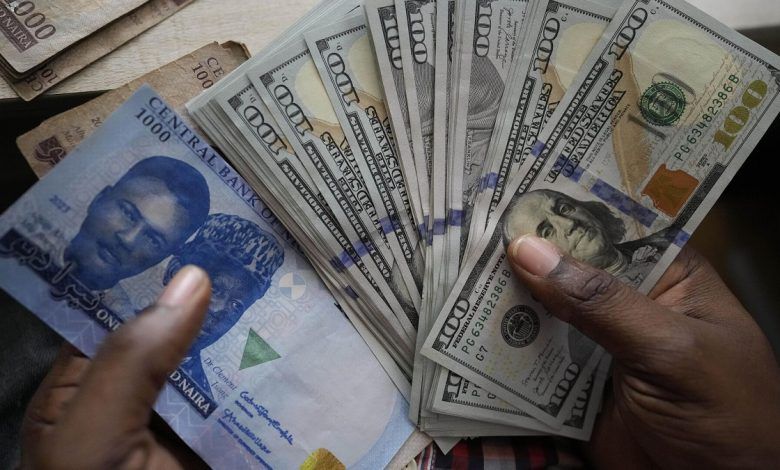
Nigeria’s currency, the naira, recorded its steepest official depreciation yet on Wednesday, May 28, 2025 coinciding with President Bola Ahmed Tinubu’s second anniversary in office.
According to data from the Central Bank of Nigeria (CBN), the naira closed trading at ₦1,590.74 per dollar at the official Investors’ and Exporters’ (I&E) window, a drop of ₦7.01 from Tuesday’s rate of ₦1,583.73. This marks the sharpest daily loss since May 26.
The currency’s downward spiral continued in the parallel (black) market, where it slid further by ₦3 to settle at ₦1,620/$, down from ₦1,617 the previous day.
The continued depreciation underscores the lingering volatility in Nigeria’s foreign exchange markets, despite recent efforts by the CBN to introduce reforms aimed at stabilizing the naira.
From Reform to Rout: The Aftermath of Currency Float
The naira’s struggles date back to June 2023, when the Tinubu administration made the bold move to float the currency, eliminating multiple exchange rates in a bid to unify the FX market. At the time, the naira traded around ₦460/$, but has since lost more than 245% of its value in less than two years.
While the float was initially lauded by international investors and financial institutions for promoting transparency and market efficiency, the policy has also exposed deep underlying weaknesses in Nigeria’s FX supply chain particularly its dependence on oil exports and limited dollar inflows from other sectors.
A Stark Contrast to Official Optimism
The latest depreciation comes just days after CBN Governor Olayemi Cardoso claimed that Nigeria’s FX volatility had declined significantly reportedly to below 0.5%. He attributed this improvement to a combination of tight monetary policies, reduced deficit financing, and greater coordination between fiscal and monetary authorities.
However, analysts warn that such figures may not reflect real market pressures, especially with the parallel market rates diverging sharply from official windows.
Two Years In, Currency Woes Persist
President Tinubu’s second anniversary is being marked by mounting economic pressures, including inflation now in double digits, persistent food insecurity, and widespread concerns over currency stability. The naira’s performance on this symbolic day is likely to intensify scrutiny of the government’s economic agenda, especially as the African Development Bank recently projected that the naira could depreciate by at least 6% more between 2025 and 2026.
Conclusion
With the naira continuing to slide amid ongoing structural weaknesses and a constrained FX supply, the coming months will test the Tinubu administration’s ability to stabilize the economy, restore investor confidence, and implement reforms that go beyond rhetoric.