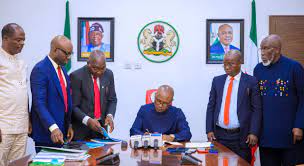
Rivers State Governor, Siminalayi Fubara, has said his deliberate choice to embrace what some critics call “weakness” was a strategic decision aimed at preserving peace and ensuring political stability in the state.
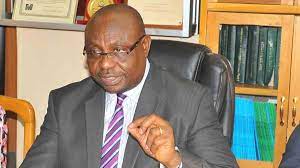
The governor made the remarks on Friday night in Lagos while receiving a Man of the Year award at the New Telegraph Awards/Dinner Night, where he emotionally reflected on leadership, loyalty, and reconciliation. He dedicated the award to his predecessor and current Minister of the Federal Capital Territory, Nyesom Wike.
“Today is a very special day for me and for everyone who has believed in me. I know that for believing in me, you have borne your own share of pain,” Fubara said.
Addressing the protracted political tensions that have shaped Rivers State’s political climate since he assumed office in May 2023, the governor acknowledged that his approach has been widely interpreted in different ways.
“Some describe it as weakness; others see it as strength. But I chose, for many reasons, to be weak,” he stated. “Weak because I want peace. Weak because we must survive. Weak because there are things we must protect — not just for ourselves, but for our dear state and nation.”
In a striking assertion that may resonate across Nigeria’s political landscape, Fubara added: “Weakness is a virtue. It pays at the right time.”
He thanked his family and the people of Rivers State for their restraint and maturity throughout months of uncertainty, praising their calm support amid political turbulence.
“To the wonderful people of Rivers State who have shown patience, quiet strength, and maturity — it is your support that has brought us this far,” he said.
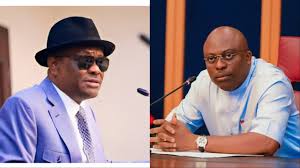
In a symbolic gesture that underscores recent reconciliation efforts, Fubara dedicated the award to Wike, widely regarded as his political benefactor. “He discovered me,” the governor has previously acknowledged in reference to his rise within the state’s political structure.
The renewed warmth between the two leaders follows mediation efforts by President Bola Tinubu aimed at resolving the crisis that fractured the state’s political leadership. The dispute, which erupted months after Fubara took office, led to deep divisions within the Rivers State House of Assembly, impeachment threats, and prolonged governance uncertainty.
Speaking recently in Abuja after inspecting projects, Wike expressed optimism about the reconciliation process, crediting presidential intervention for easing tensions. “I believe, by the grace of God, this will be the last time,” he said, describing President Tinubu as a father figure who stepped in to restore calm.
Earlier, during an inspection of the Port Harcourt Ring Road project, Fubara publicly acknowledged Wike’s role in conceptualising the initiative, referring to him as “My Oga” — a remark widely interpreted as a gesture of respect and reconciliation.
Recent developments, including the governor’s reported submission of a fresh list of commissioner-nominees to the state Assembly, suggest concrete steps toward stabilising governance and restoring political cohesion in Rivers State.
Fubara’s remarks on Friday night signal not just personal reflection, but what may be a turning point in one of Nigeria’s most closely watched political rivalries.