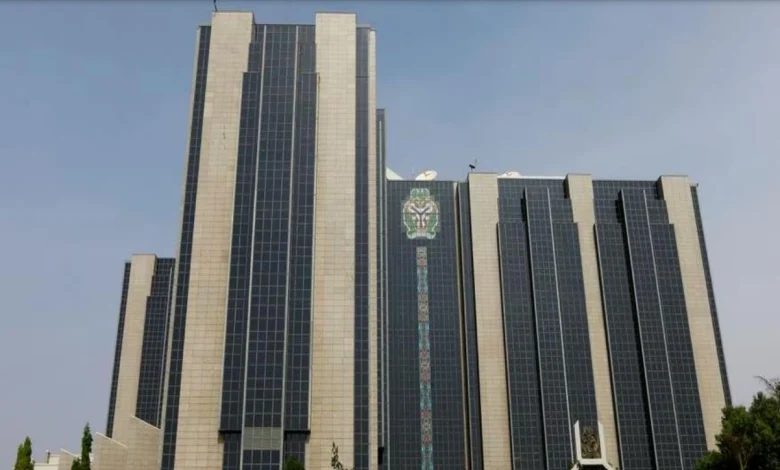
As of the end of the first half of 2025, at least five banks have met the revised capital thresholds set by the Central Bank of Nigeria (CBN) as part of its ongoing banking sector recapitalisation drive. The banks include Access Bank, Zenith Bank, Ecobank Nigeria, Lotus Bank, and Jaiz Bank.
In March 2024, the CBN issued a directive requiring all commercial banks with international authorisation to raise their capital base to ₦500 billion, while national banks must meet a minimum of ₦200 billion, and regional banks, ₦50 billion. Similarly, non-interest banks are required to raise ₦20 billion (national) and ₦10 billion (regional), with a compliance deadline set for March 2026.
Access Bank Leads the Pack
Access Bank became the first Tier-1 lender to cross the ₦500 billion capital threshold. Its parent company, Access Holdings, announced in December 2024 that it had secured regulatory approval for a ₦351 billion rights issue, raising the bank’s capital to ₦600 billion, well above the CBN’s minimum requirement.
Zenith and Ecobank Follow
Zenith Bank Plc followed with the successful completion of a ₦350.4 billion combined rights issue and public offer, raising its share capital to ₦614.65 billion, exceeding the regulatory minimum by ₦114.65 billion.
Ecobank Nigeria, a national bank, also confirmed its compliance. According to Fitch Ratings, the bank needed only a modest capital injection to meet the requirement. However, Fitch also noted that Ecobank Nigeria remains in breach of the 10% capital adequacy ratio but has plans to raise additional capital. Its parent company, Ecobank Transnational Incorporated, raised $125 million in May 2025 through a tap of its existing $400 million notes due 2029.
Non-Interest Banks: Lotus and Jaiz Cross the Line
Lotus Bank, a national non-interest bank, confirmed it had already exceeded the ₦20 billion capital requirement. Speaking at a media event, the bank’s Executive Director, Isiaka Ajani-Lawal, said the bank had achieved the capital benchmark even before the CBN’s directive was issued.
Jaiz Bank, another non-interest lender, also surpassed the new threshold. In January 2025, the bank announced it had completed a ₦10.04 billion private placement, which was subsequently listed on the Nigerian Exchange, following approvals from the CBN, SEC, and NGX.
Other Banks Accelerate Capital-Raising Efforts
With less than nine months to the March 2026 deadline, other banks have moved into the second phase of their recapitalisation plans. Many have turned to private placements, debt markets, and international capital markets to shore up their capital base.
Guaranty Trust Holding Company (GTCO) has launched a new international capital raise of $100 million, with plans to list on the London Stock Exchange’s Main Market. This follows a ₦209 billion public offer in July 2024. GTCO said the proceeds will help recapitalise its banking subsidiary and fund growth initiatives.
In a significant shift, GTCO also announced the cancellation of its existing Global Depository Receipts (GDRs) and plans to replace them with an ordinary share listing on the LSE’s main board. Group CEO Segun Agbaje described the move as a “pivotal moment” in GTCO’s growth journey.
First HoldCo and Others in the Pipeline
First HoldCo, the parent of FirstBank, revealed in its FY2024 earnings that it plans to raise ₦350 billion in additional capital via private placement, with a Q2 2025 target. The company aims to grow its paid-up capital to ₦748 billion upon completion.
Despite the momentum, Afrinvest Research estimates that Fidelity Bank, FCMB, Sterling Bank, Stanbic IBTC, and United Bank for Africa (UBA) collectively face a ₦733.70 billion capital gap.
Wema Bank, through a ₦150 billion rights issue and special placement, appears on track to meet the ₦200 billion requirement.
Silence from Union, Polaris, Keystone
Some banks, however, remain quiet. Union Bank, Polaris Bank, and Keystone Bank now under CBN control have yet to publicly announce any recapitalisation plans.
Unity Bank is pursuing a merger with Providus Bank, backed by a ₦700 billion financial accommodation from the CBN. However, the new entity must still raise additional funds to retain a national banking license.
Consolidation Looms for Smaller Banks
Tier-3 banks, including Globus Bank, Standard Chartered Bank, Nova Bank, Titan Trust Bank, Premium Trust Bank, Optimus Bank, and Citibank Nigeria, appear headed toward mergers and acquisitions (M&A), though no formal moves have been announced.
Fitch Ratings, in multiple reports, has projected that M&A activity and license downgrades are increasingly likely among smaller banks, especially as recapitalisation deadlines draw closer.