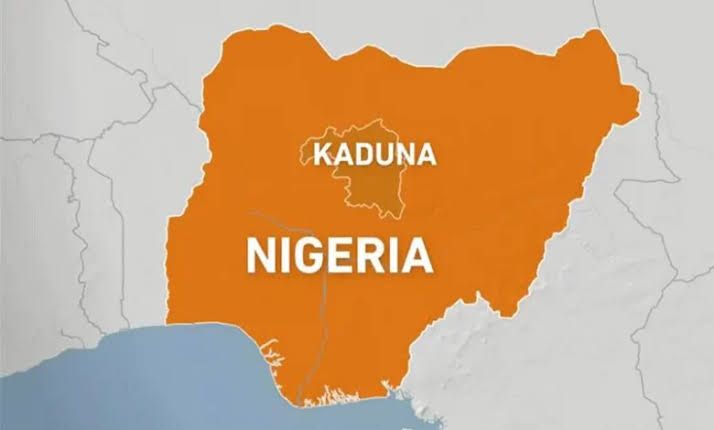
The Federal Government of Nigeria has secured a $25.35 million concessionary loan from the Kuwait Fund for Arab Economic Development to support a large-scale education initiative in Kaduna State, aimed at reducing the number of out-of-school children.
The facility signed on behalf of the Kaduna State Government is part of a broader $62.8 million blended financing package involving several international development partners. The initiative is designed to expand access to inclusive, quality education in a state among the hardest-hit by school dropouts.
According to a statement released on Tuesday by Mohammed Manga, Director of Information and Public Relations at the Federal Ministry of Finance, the loan will support the implementation of the Reaching Out-of-School Children (ROOSC) programme. The intervention specifically targets vulnerable groups such as girls, children with disabilities, and internally displaced persons (IDPs).
“In a significant step towards improving access to quality education in Nigeria, the Federal Government and the Kuwait Fund for Arab Economic Development have partnered to support the Reaching Out-of-School Children programme in Kaduna State,” the statement read.
The project will facilitate the enrolment of over 100,000 children, the construction of 102 new climate-resilient schools, and the rehabilitation of 170 existing schools and learning centres. It also aims to enhance the learning environment, improve teacher capacity, and prioritise marginalised and remote communities.
Minister of Finance and Coordinating Minister of the Economy, Mr. Wale Edun, represented by Minister of State for Finance, Dr. Doris Uzoka-Anite, said the initiative reflects the government’s focus on transparency, accountability, and measurable results in social investment.
“With millions of children still out of school, particularly in northern Nigeria, every dollar must deliver real and visible impact,” Edun noted.
He commended Kaduna State for its leadership and proactive engagement with partners, stating that the programme could become a replicable model for other states.
Kaduna State Governor, Uba Sani, also expressed strong support for the programme. He disclosed that Kaduna had already fulfilled its $1 million counterpart funding obligation and had increased the education budget allocation to 26% for 2025, reflecting the state’s commitment to human capital development.
Meanwhile, the Director-General of the Kuwait Fund, Dr. Wahid Al-Bahar, described the initiative as “an investment in hope.” He emphasised that its goals transcend infrastructure, aiming to create sustainable pathways for every child to access learning.
“Success will be measured not only by buildings, but by improved enrolment, learning outcomes, and stronger community involvement,” Al-Bahar said.
The funding breakdown for the $62.8 million package includes:
- $25.35 million (Kuwait Fund loan)
- $10.5 million (Islamic Development Bank loan)
- $15.45 million (Global Partnership for Education grant)
- $10 million (Education Above All Foundation grant)
- $0.5 million (technical assistance from Save the Children International)
- $1 million (Kaduna State contribution)
The Federal Ministry of Finance will oversee the fiduciary aspects of the programme, working alongside Kaduna State and development partners to monitor progress through joint assessments, focusing on enrolment data, teacher training benchmarks, and academic performance metrics.